
怎麼讀八字盤:先結構,後故事
八字 · 2026年7月15日
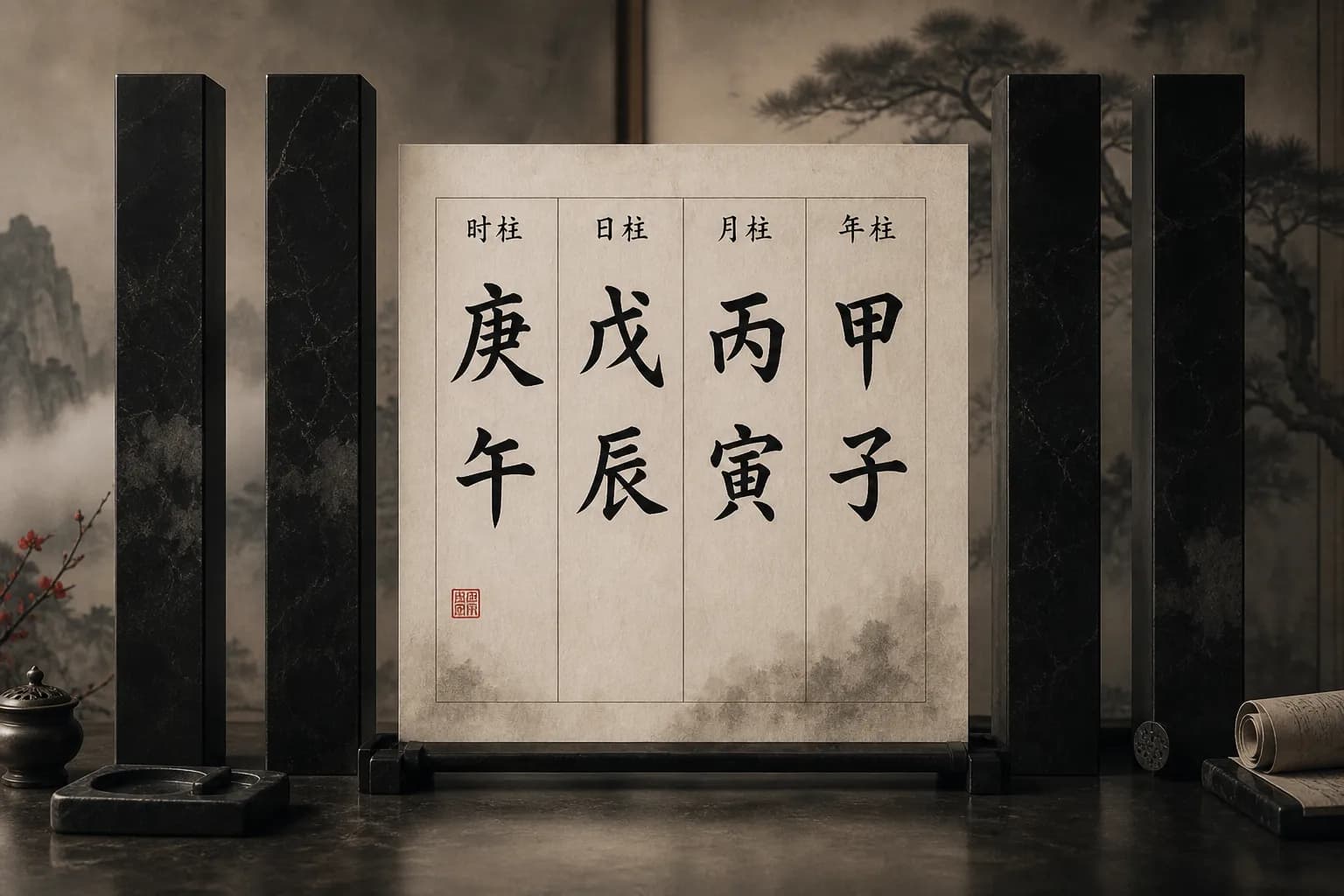
如果你在網上查過自己的八字,大概見過這樣的結果:
年柱:甲辰 · 月柱:丁卯 · 日柱:壬寅 · 時柱:戊申
八個字,四列。然後網站告訴你「你屬於弱水」「缺火」之類的結論——然後呢?大多數入門文章要麼堆術語把你淹沒,要麼跳過原理直接講性格,看完你還是不知道**這些字到底怎麼讀**。
這篇文章的寫法跟很多入門不一樣。我不會假裝所有問題都有統一答案——事實上八字內部有些爭議兩百多年都沒解決,回避它們反而是對讀者的不誠實。我會先幫你把結構理清楚,再講怎麼看,中間會穿插一些流派之間的真實分歧。這些分歧不是「大師打架」的戲碼,而是**同一張盤、不同分析方法會給出不同側重點**——理解這一點比背會十神名稱重要得多。
八個字是什麼:一個時間編碼
八字盤的核心操作極其簡單:**把一個出生時刻,編碼成八個漢字。**
這八個字來自天干地支紀時系統——中國沿用了三千多年的時間記錄方式。天干有十個(甲乙丙丁戊己庚辛壬癸),地支有十二個(子丑寅卯辰巳午未申酉戌亥),兩兩配對,形成六十個不重複的組合(六十甲子),循環使用。
你的出生年、月、日、時各取一組干支,就是四柱——年柱、月柱、日柱、時柱。四柱乘二,得八字。
幾個容易搞錯的地方:
- **年柱不是按公曆 1 月 1 日切的**,而是以立春為界。2 月 3 日出生在立春之前,年柱還是上一年的。 - **月柱也不是按農曆初一切的**,而是按節氣。一年二十四個節氣,十二個「節」是月柱的分界點。 - **時柱每個時辰兩個小時**。23:00–01:00 是子時,01:00–03:00 是丑時,以此類推。
這四個時間錨點,精度到兩個小時。排錯一個時辰,四柱可能完全不同。
到這裡還沒有任何玄學成分——就是一個時間編碼系統。真正的命理分析,開始於**看這八個字彼此之間發生了什麼。**
五行:不是性格標籤,是關係力
八字裡所有天干地支都歸屬於五行:木、火、土、金、水。五行之間存在兩種基本關係:
- **相生**:木生火、火生土、土生金、金生水、水生木——滋養、促進 - **相剋**:木剋土、土剋水、水剋火、火剋金、金剋木——制約、控制
初學者最容易犯的錯誤,是**把五行當性格標籤**。「你是水命所以溫柔」「你是火命所以急躁」——這種說法嚴格來說不對。同樣一個壬水日主,生在夏天和生在冬天,因為環境溫度不同,表現出來的性格傾向可以差異極大。五行的準確理解應該是**關係力**:它在盤上的意義取決於位置、季節和周圍其他五行的互動,而不是一個固定屬性貼在你頭上。
此外,陰陽貫穿所有概念。天干分陰陽,地支分陰陽,五行也分陰陽——甲木是陽木,乙木是陰木;壬水是陽水,癸水是陰水。陰陽不只是貼標籤,它決定了十神系統中「正」與「偏」的區別(比如正官和偏官),這個我們後面講十神的文章會展開。
日主:整張盤的主角
八個字裡,**日柱的天干(日干)是最重要的一個字**。它代表命主本人,稱為「日主」。
上例中日柱是壬寅,日主就是壬水。壬水的特性——陽剛、流動、聰明、善於變通——給整張盤定了一個基礎色調。但「你是水命」只是起點,遠遠不夠。同樣是壬水日主:
- 生在夏天(火當令),水被蒸發,偏弱——需要金來生水、水來幫身 - 生在冬天(水當令),水勢滔天,偏旺——需要木來疏導、土來控制 - 四柱配置不同,十神關係不同,性格和人生軌跡可以差異巨大
所以任何「你是 X 命所以性格如何」的簡化說法,都不靠譜。五行只是最粗的分類,真正的分析要往下走好幾層。
四柱各管什麼
四柱對應人生的不同領域,從宏觀到微觀(不同傳統對四柱的領域劃分並不完全一致,以下是較常見的對應方式):
| 柱 | 常見對應 |
|---|---|
| 年柱 | 家族背景、祖上、早期環境 |
| 月柱 | 父母/成長環境、社會結構、事業方向 |
| 日柱 | 自身、婚姻/配偶(日支是配偶宮) |
| 時柱 | 子女、晚景、長期結果 |
月柱的地位比較特殊。月支決定了當時**哪個五行當令(最旺盛)**,這是判斷五行力量大小的首要基準。傳統上把月支叫做「提綱」——整張盤的綱領。月令首先給季節背景,是旺衰判斷的重要參考;但當令不等於整盤的絕對優勢,仍要結合地支是否有根、天干是否有生扶、是否有制化等因素綜合判斷。
天干是「明面」的資訊,看得到直接讀;地支裡藏著天干的「根」,是力量的來源。一個天干如果在地支裡找不到根,就像浮萍,力量不實。但反過來,地支藏干也不是每一條都有效——要看它是否被合化、沖剋等因素削弱。天干和地支的關係,可以理解為:天干是露出水面的部分,地支藏干是底下的隱藏結構。只看天干不看地支,分析會嚴重失真。
看盤的核心步驟
了解基本結構之後,實際讀一張八字盤有一個大致流程。我故意說「大致」而不是「標準」——因為不同流派在這個流程的**重心排序上有分歧**,這個分歧本身就是理解八字的關鍵資訊。
在展開各步之前,先把推理鏈攤開看一眼:
**出生時刻 → 四柱 → 月令 → 根氣/透干 → 旺衰/格局 → 用神 → 十神配置 → 大運流年 → 解讀**
每一步都建立在前一步的基礎上。前一步分類錯了,後面的推理就會沿錯誤方向跑偏。這不是八字獨有的問題——任何分層推理系統都有這種級聯誤差——但八字的特殊之處在於:它沒有客觀驗證機制。你沒法做實驗證明「這張盤到底是從格還是正格」。所以對每一步分類的**置信度管理**,本身就是這門知識體系的一部分。
第一步:看日主旺衰
日主是強是弱?判斷依據是月令(當令還是失令)、地支有沒有根、天干有沒有生扶。
這一步乍看簡單,實際是八字分析中**爭議最大的環節之一**。原因是:旺衰不是盤上現成的數字,是多條證據的綜合判斷,而不同派別對這些證據的加權方式不同。比如月令給了日主「當令」的優勢,但地支根氣很弱——這時候算旺還是算弱?
傳統旺衰判斷一般會強調月令、通根、透干等因素綜合來看日主強弱;而以《子平真詮》為代表的格局論則認為旺衰只是輔助判斷,**格局結構才是命局分析的核心**,在旺衰上糾纏過多反而失焦。兩者並非完全互斥,但分析重心不同。
我個人傾向認為格局決定「你是什麼類型的房子」,旺衰判斷決定「你住得舒不舒服」——單看任何一個都會漏掉一半資訊。
第二步:定格局
根據月令的藏干和天干透出的情況,確定格局類型——比如正官格、食神格、七殺格等。格局描述的是這張盤的「主旋律」。
這裡有個容易忽略的點:格局不一定在月令本氣上取。如果月令本氣不透(沒有出現在天干上),就要看月令的「中氣」或「餘氣」是否透干。透干的那個十神,才定格局。這意味著同一月令的八字,因為天干不同,格局可以完全不一樣。
第三步:取用神
「用神」這個詞在八字裡至少有三種含義,很多人混著用,導致混亂。
**格局用神**:維護格局成立的那個十神。比如正官格,正官就是用神——正官受傷則格局受損。
**扶抑用神**:平衡日主旺衰的那個五行。日主太旺需要剋洩耗,太弱需要生扶。
**調候用神**:調節命局寒暖燥濕的五行。這是很多初學者不知道的一層——如果生在臘月,水旺而全局極寒,那怕格局很好、旺衰很平衡,也可能因為「太凍了」而不行。這時候需要火來調候,這就是《窮通寶鑑》那一派的實戰核心。
三種用神分別回答三個不同的問題:你的結構核心是什麼?你的力量平衡點在哪裡?你的環境溫度適不適宜?在完整的分析中三者都應該考慮,但它們的優先級取決於具體情況。比如在寒暖極端的月份(深冬、酷暑),調候需求往往優先級很高,不能跳過。
第四步:看十神配置
十神(比肩、劫財、食神、傷官、正財、偏財、正官、七殺、正印、偏印)描述日主與其他七個字之間的關係——誰幫你,誰剋你,誰跟你競爭,誰被你控制。不同十神落在不同柱,對應不同人生領域。
第五步:看大運流年
原局(八個字本身)是「命」——先天框架。大運和流年是「運」——後天的時間推移。原局好但大運不好,未必順遂;原局普通但大運一路走用神運,也能有所成就。每一步大運管十年,每一年流年疊加上去,像一層一層地給原局加濾鏡。
一個容易犯的錯:只看原局不看大運。原局是靜態照片,大運是動態影片。不看時間維度,等於只看一個人的骨骼結構就預測他的運動生涯。
一個真實會卡住的地方:從格
大部分八字分析都在上面五步的框架內進行。但有一個特殊情況會讓整個流程打回重寫——**從格**。
當命局中某一五行力量絕對壓倒性地強大,日主完全無法與之抗衡時,傳統做法認為日主應該「放棄抵抗」,轉而順從最強旺的五行。這時候分析方向完全反轉:不再扶抑日主,反而要強化那個最旺的五行。
從格的判斷標準在實務中很模糊。「絕對壓倒性」到底多絕對?不同派別的門檻不同,有人定得鬆,有人定得緊。
這就回到了前面說的**級聯誤差**問題:如果從格判斷錯誤——其實是普通格局但你當從格看,或者反過來——後面的用神選取、十神解讀、大運吉凶判斷,會全部沿錯誤方向跑偏。因為用神、十神的含義在從格和正格下幾乎是反的:正格里需要剋制的東西,從格裡反而要保護。
我自己的做法是把從格當作**高置信度結論**,只在月令本氣極旺、日主無根無生扶、全局幾乎沒有反抗力量時才啟用。門檻定得緊一些,寧可漏判不要誤判。這不是保守——是承認這套推理系統在分類邊界處存在結構性模糊,而誤分類的代價遠大於漏分類。
幾個常見的坑
**「你是水命,所以溫柔。」** 五行只是第一層分類。同為水,壬水和癸水差異很大。同為壬水,旺衰不同、十神不同,性格可能南轅北轍。
**「你命中注定怎樣怎樣。」** 八字讀的是傾向和可能性,不是判決書。它能告訴你某些領域更容易遇到挑戰,但不能告訴你一定會怎樣。大運、個人選擇、環境因素都在起作用。
**只看天干不看地支藏干。** 天干是明面的資訊,地支藏干是底下的隱藏結構——力量、根氣、暗藏的沖合都在地支裡發生。忽略地支,等於只看建築的立面就判斷它的承重結構。
---
八字盤是一套高度形式化的符號推理系統。它有明確的規則,有清晰的分層流程,也有自己的邊界——層與層之間的級聯誤差無法通過實驗驗證來修正,某些分類的標準在派別之間存在真實分歧。它能做的比很多人以為的多,但做不到的也比很多人承認的多。這篇文章拆到這一層,是想讓感興趣的人能看懂這套系統在做什麼,而不是給出一個簡化到失真的版本。