
Qi Men Dun Jia vs BaZi: The Blueprint and the Move
July 19, 2026 · Last verified: 2026-07-19
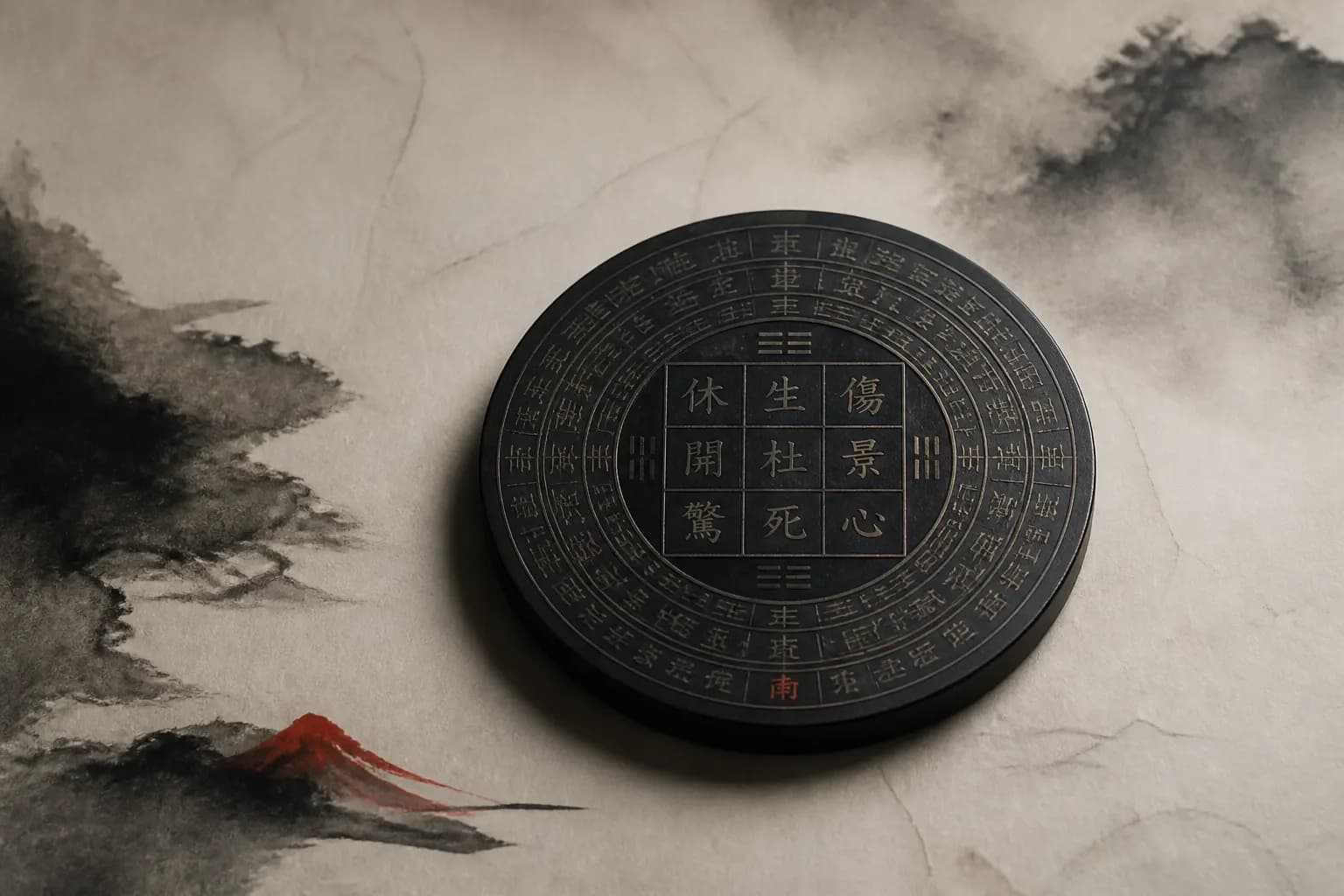
BaZi and Qi Men Dun Jia are both classical Chinese systems, and they are constantly confused — because both speak the language of stems, branches, and the Five Elements. But they answer different questions. BaZi is a birth chart: eight characters drawn from your birth moment that map the structure and timing of a life. Qi Men Dun Jia is a tactical chart of the moment: a board of palaces, stars, doors, and deities cast for a specific hour to inform a specific decision. If BaZi is the blueprint, Qimen is the move. This page explains the difference plainly, shows when each system is the right tool, and lets you cast both.
The short answer
BaZi is natal: it starts from your birth year, month, day, and hour, and reads elemental structure, Ten Gods, and ten-year Luck Pillars. Qi Men Dun Jia (time-school / 时家) is situational: it starts from the hour of a question or event and lays out a nine-palace board for that moment. One describes the long arc you were born with. The other informs a concrete move — timing, direction, posture — inside a window you already care about.
Neither chart decides your future. Both are reference maps within their own traditions.
Different inputs, different jobs
| BaZi (Four Pillars) | Qi Men Dun Jia | |
|---|---|---|
| Main input | Birth date and time (plus place for true solar time) | Hour of the question or planned action |
| Output shape | Eight characters + Luck Pillars | Nine palaces with stems, doors, stars, deities |
| Time scale | Life structure and decade rhythms | Hours and short decision windows |
| Typical question | What patterns and seasons show up in this life? | When and how should I move on this matter? |
BaZi needs birth data. The common Qimen method does not — that is the cleanest way to remember which tool you are holding.
When to use which
Use **BaZi** when the question is structural: career arc, relationship dynamics over years, elemental balance, Luck Pillars and annual timing. Start at /atlas/bazi-calculate.
Use **Qi Men Dun Jia** when the question is tactical: a negotiation window, a launch day, a travel direction, a yes/no about acting now versus waiting. Start at /atlas/qimen.
Adjacent timing questions that are calendar-based rather than Qimen-tactical can also use the Chinese almanac at /atlas/huangli.
How practitioners combine them
The classical workflow is not "pick a winner." Practitioners often use BaZi to understand a person's structure and the broad timing window (Luck Pillars, annual influences), then cast a Qimen chart to choose the concrete moment and direction for the action. One sets the context; the other sets the move.
Treat agreement between the two as a stronger signal to notice — not as fate locking in. Treat disagreement as two questions worth asking, not as one system defeating the other.
If you are choosing among natal Chinese systems rather than natal vs tactical, see Zi Wei Dou Shu vs BaZi at /guides/compare/zi-wei-dou-shu-vs-bazi.
Try both free
Neither chart acts on your behalf. These systems can inform when and how you move; the move itself is always yours.
- Cast your birth chart free: /atlas/bazi-calculate - Plot a Qi Men Dun Jia board free: /atlas/qimen
No signup is required for either chart.