
怎么读八字盘:先结构,后故事
八字 · 2026年7月15日
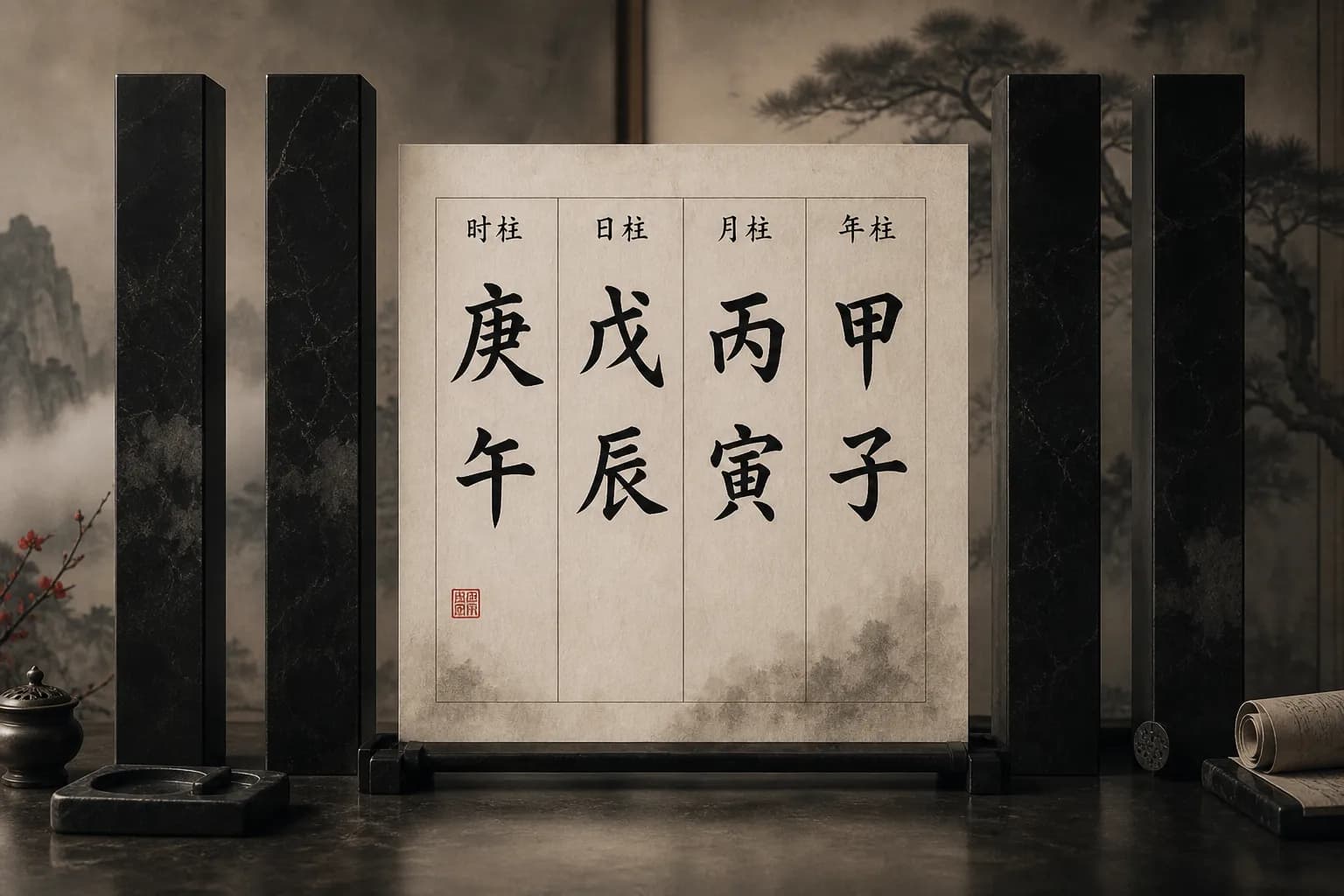
如果你在网上查过自己的八字,大概见过这样的结果:
年柱:甲辰 · 月柱:丁卯 · 日柱:壬寅 · 时柱:戊申
八个字,四列。然后网站告诉你「你属于弱水」「缺火」之类的结论——然后呢?大多数入门文章要么堆术语把你淹没,要么跳过原理直接讲性格,看完你还是不知道**这些字到底怎么读**。
这篇文章的写法跟很多入门不一样。我不会假装所有问题都有统一答案——事实上八字内部有些争议两百多年都没解决,回避它们反而是对读者的不诚实。我会先帮你把结构理清楚,再讲怎么看,中间会穿插一些流派之间的真实分歧。这些分歧不是「大师打架」的戏码,而是**同一张盘、不同分析方法会给出不同侧重点**——理解这一点比背会十神名称重要得多。
八个字是什么:一个时间编码
八字盘的核心操作极其简单:**把一个出生时刻,编码成八个汉字。**
这八个字来自天干地支纪时系统——中国沿用了三千多年的时间记录方式。天干有十个(甲乙丙丁戊己庚辛壬癸),地支有十二个(子丑寅卯辰巳午未申酉戌亥),两两配对,形成六十个不重复的组合(六十甲子),循环使用。
你的出生年、月、日、时各取一组干支,就是四柱——年柱、月柱、日柱、时柱。四柱乘二,得八字。
几个容易搞错的地方:
- **年柱不是按公历 1 月 1 日切的**,而是以立春为界。2 月 3 日出生在立春之前,年柱还是上一年的。 - **月柱也不是按农历初一切的**,而是按节气。一年二十四个节气,十二个「节」是月柱的分界点。 - **时柱每个时辰两个小时**。23:00–01:00 是子时,01:00–03:00 是丑时,以此类推。
这四个时间锚点,精度到两个小时。排错一个时辰,四柱可能完全不同。
到这里还没有任何玄学成分——就是一个时间编码系统。真正的命理分析,开始于**看这八个字彼此之间发生了什么。**
五行:不是性格标签,是关系力
八字里所有天干地支都归属于五行:木、火、土、金、水。五行之间存在两种基本关系:
- **相生**:木生火、火生土、土生金、金生水、水生木——滋养、促进 - **相克**:木克土、土克水、水克火、火克金、金克木——制约、控制
初学者最容易犯的错误,是**把五行当性格标签**。「你是水命所以温柔」「你是火命所以急躁」——这种说法严格来说不对。同样一个壬水日主,生在夏天和生在冬天,因为环境温度不同,表现出来的性格倾向可以差异极大。五行的准确理解应该是**关系力**:它在盘上的意义取决于位置、季节和周围其他五行的互动,而不是一个固定属性贴在你头上。
此外,阴阳贯穿所有概念。天干分阴阳,地支分阴阳,五行也分阴阳——甲木是阳木,乙木是阴木;壬水是阳水,癸水是阴水。阴阳不只是贴标签,它决定了十神系统中「正」与「偏」的区别(比如正官和偏官),这个我们后面讲十神的文章会展开。
日主:整张盘的主角
八个字里,**日柱的天干(日干)是最重要的一个字**。它代表命主本人,称为「日主」。
上例中日柱是壬寅,日主就是壬水。壬水的特性——阳刚、流动、聪明、善于变通——给整张盘定了一个基础色调。但「你是水命」只是起点,远远不够。同样是壬水日主:
- 生在夏天(火当令),水被蒸发,偏弱——需要金来生水、水来帮身 - 生在冬天(水当令),水势滔天,偏旺——需要木来疏导、土来控制 - 四柱配置不同,十神关系不同,性格和人生轨迹可以差异巨大
所以任何「你是 X 命所以性格如何」的简化说法,都不靠谱。五行只是最粗的分类,真正的分析要往下走好几层。
四柱各管什么
四柱对应人生的不同领域,从宏观到微观(不同传统对四柱的领域划分并不完全一致,以下是较常见的对应方式):
| 柱 | 常见对应 |
|---|---|
| 年柱 | 家族背景、祖上、早期环境 |
| 月柱 | 父母/成长环境、社会结构、事业方向 |
| 日柱 | 自身、婚姻/配偶(日支是配偶宫) |
| 时柱 | 子女、晚景、长期结果 |
月柱的地位比较特殊。月支决定了当时**哪个五行当令(最旺盛)**,这是判断五行力量大小的首要基准。传统上把月支叫做「提纲」——整张盘的纲领。月令首先给季节背景,是旺衰判断的重要参考;但当令不等于整盘的绝对优势,仍要结合地支是否有根、天干是否有生扶、是否有制化等因素综合判断。
天干是「明面」的信息,看得到直接读;地支里藏着天干的「根」,是力量的来源。一个天干如果在地支里找不到根,就像浮萍,力量不实。但反过来,地支藏干也不是每一条都有效——要看它是否被合化、冲克等因素削弱。天干和地支的关系,可以理解为:天干是露出水面的部分,地支藏干是底下的隐藏结构。只看天干不看地支,分析会严重失真。
看盘的核心步骤
了解基本结构之后,实际读一张八字盘有一个大致流程。我故意说「大致」而不是「标准」——因为不同流派在这个流程的**重心排序上有分歧**,这个分歧本身就是理解八字的关键信息。
在展开各步之前,先把推理链摊开看一眼:
**出生时刻 → 四柱 → 月令 → 根气/透干 → 旺衰/格局 → 用神 → 十神配置 → 大运流年 → 解读**
每一步都建立在前一步的基础上。前一步分类错了,后面的推理就会沿错误方向跑偏。这不是八字独有的问题——任何分层推理系统都有这种级联误差——但八字的特殊之处在于:它没有客观验证机制。你没法做实验证明「这张盘到底是从格还是正格」。所以对每一步分类的**置信度管理**,本身就是这门知识体系的一部分。
第一步:看日主旺衰
日主是强是弱?判断依据是月令(当令还是失令)、地支有没有根、天干有没有生扶。
这一步乍看简单,实际是八字分析中**争议最大的环节之一**。原因是:旺衰不是盘上现成的数字,是多条证据的综合判断,而不同派别对这些证据的加权方式不同。比如月令给了日主「当令」的优势,但地支根气很弱——这时候算旺还是算弱?
传统旺衰判断一般会强调月令、通根、透干等因素综合来看日主强弱;而以《子平真诠》为代表的格局论则认为旺衰只是辅助判断,**格局结构才是命局分析的核心**,在旺衰上纠缠过多反而失焦。两者并非完全互斥,但分析重心不同。
我个人倾向认为格局决定「你是什么类型的房子」,旺衰判断决定「你住得舒不舒服」——单看任何一个都会漏掉一半信息。
第二步:定格局
根据月令的藏干和天干透出的情况,确定格局类型——比如正官格、食神格、七杀格等。格局描述的是这张盘的「主旋律」。
这里有个容易忽略的点:格局不一定在月令本气上取。如果月令本气不透(没有出现在天干上),就要看月令的「中气」或「余气」是否透干。透干的那个十神,才定格局。这意味着同一月令的八字,因为天干不同,格局可以完全不一样。
第三步:取用神
「用神」这个词在八字里至少有三种含义,很多人混着用,导致混乱。
**格局用神**:维护格局成立的那个十神。比如正官格,正官就是用神——正官受伤则格局受损。
**扶抑用神**:平衡日主旺衰的那个五行。日主太旺需要克泄耗,太弱需要生扶。
**调候用神**:调节命局寒暖燥湿的五行。这是很多初学者不知道的一层——如果生在腊月,水旺而全局极寒,那怕格局很好、旺衰很平衡,也可能因为「太冻了」而不行。这时候需要火来调候,这就是《穷通宝鉴》那一派的实战核心。
三种用神分别回答三个不同的问题:你的结构核心是什么?你的力量平衡点在哪里?你的环境温度适不适宜?在完整的分析中三者都应该考虑,但它们的优先级取决于具体情况。比如在寒暖极端的月份(深冬、酷暑),调候需求往往优先级很高,不能跳过。
第四步:看十神配置
十神(比肩、劫财、食神、伤官、正财、偏财、正官、七杀、正印、偏印)描述日主与其他七个字之间的关系——谁帮你,谁克你,谁跟你竞争,谁被你控制。不同十神落在不同柱,对应不同人生领域。
第五步:看大运流年
原局(八个字本身)是「命」——先天框架。大运和流年是「运」——后天的时间推移。原局好但大运不好,未必顺遂;原局普通但大运一路走用神运,也能有所成就。每一步大运管十年,每一年流年叠加上去,像一层一层地给原局加滤镜。
一个容易犯的错:只看原局不看大运。原局是静态照片,大运是动态影片。不看时间维度,等于只看一个人的骨骼结构就预测他的运动生涯。
一个真实会卡住的地方:从格
大部分八字分析都在上面五步的框架内进行。但有一个特殊情况会让整个流程打回重写——**从格**。
当命局中某一五行力量绝对压倒性地强大,日主完全无法与之抗衡时,传统做法认为日主应该「放弃抵抗」,转而顺从最强旺的五行。这时候分析方向完全反转:不再扶抑日主,反而要强化那个最旺的五行。
从格的判断标准在实务中很模糊。「绝对压倒性」到底多绝对?不同派别的门槛不同,有人定得松,有人定得紧。
这就回到了前面说的**级联误差**问题:如果从格判断错误——其实是普通格局但你当从格看,或者反过来——后面的用神选取、十神解读、大运吉凶判断,会全部沿错误方向跑偏。因为用神、十神的含义在从格和正格下几乎是反的:正格里需要克制的东西,从格里反而要保护。
我自己的做法是把从格当作**高置信度结论**,只在月令本气极旺、日主无根无生扶、全局几乎没有反抗力量时才启用。门槛定得紧一些,宁可漏判不要误判。这不是保守——是承认这套推理系统在分类边界处存在结构性模糊,而误分类的代价远大于漏分类。
几个常见的坑
**「你是水命,所以温柔。」** 五行只是第一层分类。同为水,壬水和癸水差异很大。同为壬水,旺衰不同、十神不同,性格可能南辕北辙。
**「你命中注定怎样怎样。」** 八字读的是倾向和可能性,不是判决书。它能告诉你某些领域更容易遇到挑战,但不能告诉你一定会怎样。大运、个人选择、环境因素都在起作用。
**只看天干不看地支藏干。** 天干是明面的信息,地支藏干是底下的隐藏结构——力量、根气、暗藏的冲合都在地支里发生。忽略地支,等于只看建筑的立面就判断它的承重结构。
---
八字盘是一套高度形式化的符号推理系统。它有明确的规则,有清晰的分层流程,也有自己的边界——层与层之间的级联误差无法通过实验验证来修正,某些分类的标准在派别之间存在真实分歧。它能做的比很多人以为的多,但做不到的也比很多人承认的多。这篇文章拆到这一层,是想让感兴趣的人能看懂这套系统在做什么,而不是给出一个简化到失真的版本。