
How to Read a Solar Return Chart: Using Your Birthday Chart to Spot the Year's Themes
Astrology · July 15, 2026
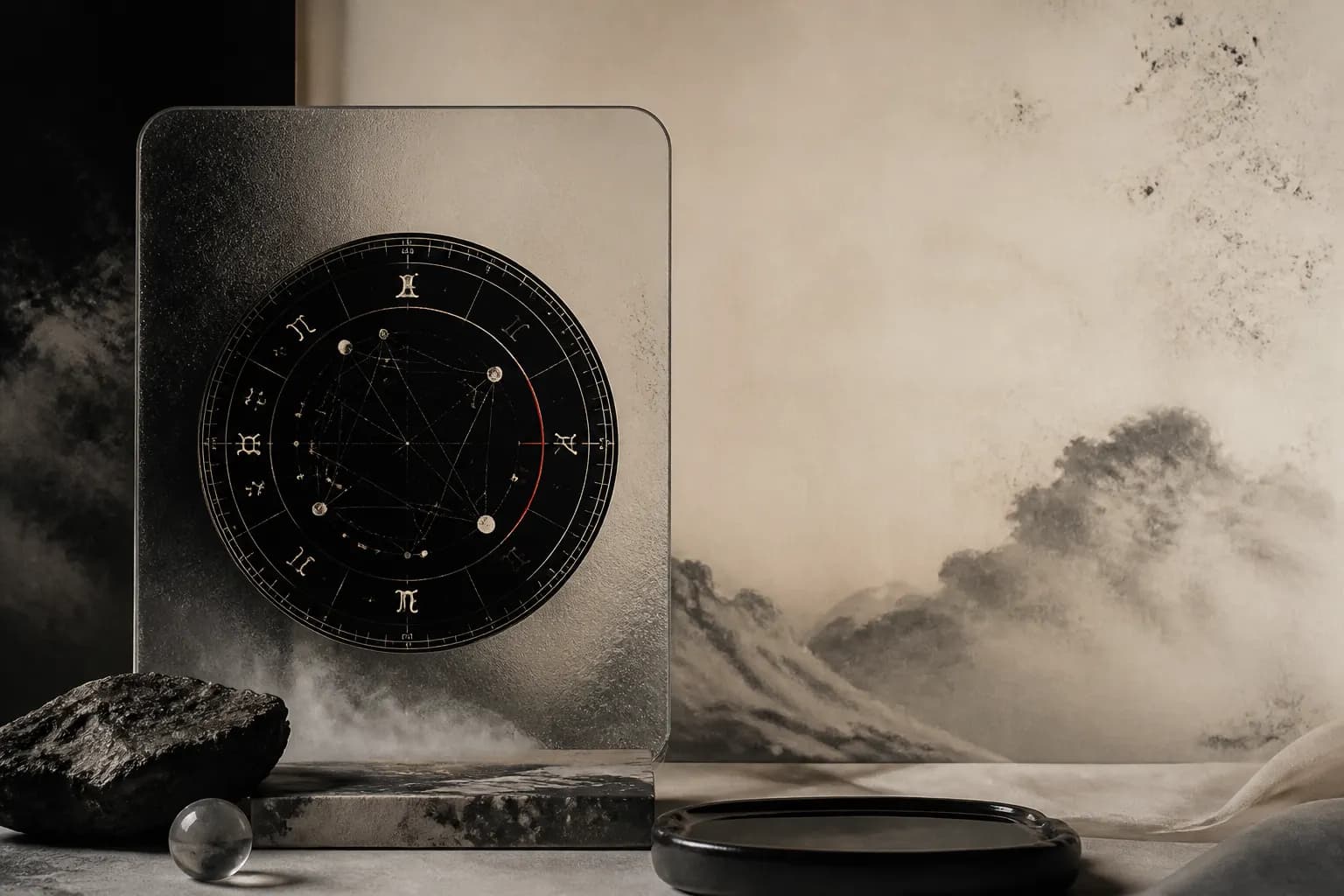
Every year around your birthday, the Sun returns to the exact position it occupied when you were born. Astrologers cast a chart for that moment and call it a Solar Return—some people just call it a "year chart" or "birthday chart."
The purpose is straightforward: it shows you the themes for the year ahead. Not what will happen on any given day, but where the overall energy of the year will be concentrated.
The Basic Logic of Solar Returns
The core principle isn't complicated. At the moment you were born, the Sun sat at a specific zodiacal degree—say, 15°22' Gemini. Each year after that, when the Sun completes its lap around the zodiac and returns to that degree (usually within a day of your birthday), the sky at that instant forms an independent chart.
This chart has its own Ascendant, MC, house divisions, planetary placements, and aspect structure. It's a "yearly snapshot"—a panorama of the sky at the moment the Sun comes home.
Mary Shea, in *Planets in Solar Returns*, compared Solar Returns to tree rings—each ring records that year's climate conditions. The analogy fits: tree rings won't tell you if it rained on a particular Tuesday, but they tell you whether the year was generally wet or dry.
One thing to keep in mind: a Solar Return chart is not a subsidiary of your natal chart. It's a standalone chart with its own complete interpretive logic. In practice, though, it always needs to be read against the natal chart—reading a return without natal context is like discussing renovation without a foundation.
Calculation: Precision Down to the Minute
Solar Return charts demand fairly precise calculation. The exact moment the Sun reaches your natal solar degree often differs from your birthday by several hours—even a day or two.
The reason is the gap between the tropical year (365 days, 5 hours, 48 minutes, 46 seconds) and the calendar year (365 or 366 days). The offset is especially noticeable around leap years and can reach a day or more. So if your birthday is February 28, the Sun's return might fall on February 26 or March 1—and this matters, because even a few hours' difference will change the Ascendant and the entire house structure.
In practice, any mainstream astrology software can generate a Solar Return in one click. Just enter your accurate birth data and the year you want to read. No manual calculation needed.
The Ascendant and MC: Setting the Year's Tone
The Ascendant and MC (Midheaven) of a Solar Return are the two most critical points on the entire chart. They determine the house cusps, which in turn determine which houses every planet falls into—and house distribution is the core of reading annual themes.
The Ascendant represents the year's "self-presentation style" and overall vibe. If the Return Ascendant lands in Aries, you'll probably lean toward initiative and action-driven living that year. If it lands in Cancer, the annual theme will more likely revolve around home, security, and emotional belonging.
The MC points to the center of gravity for career and public role that year. For instance, if the Return MC lands in Scorpio with Pluto conjoining it, you might experience profound power shifts or a public-image reinvention in your professional life.
One common mistake: treating the Return Ascendant versus the natal Ascendant as a simple "good or bad" omen. That's not how it works. The Return Ascendant tells you the year's energy style, not whether the year will be fortunate. A Capricorn Return year might be grueling but highly productive; a Libra Return year might be smooth but lacking in breakthroughs—which year is "better" depends on what your current life stage actually needs.
House Distribution: Where the Year's Attention Goes
The planetary house distribution in a Solar Return tells you directly where your attention, events, and energy will concentrate across life's domains that year.
The logic is straightforward: the houses with the most planets are the busiest areas of life.
Three or more planets in the seventh house, for example, means partnerships, relationship dynamics, or legal matters will very likely be the year's focal point. If Saturn is among them, responsibility and pressure within relationships increase simultaneously; if Venus is there too, the sweeter side of partnership gets amplified.
A stellium in the tenth house puts career center stage. In the fourth house, family and inner security become the theme. In the twelfth house, the year may be more about internal processing, healing, or invisible psychological shifts—with fewer dramatic external events.
A practical observation: if the Return's planetary distribution is highly concentrated (say, five planets crammed into two adjacent houses), the year will be very "focused"—clear priorities but easy to lose balance. If the planets are evenly spread, the annual themes will be diffuse, touching a little of everything without one dominant storyline.
The Sun and Moon in the Return Chart
The Sun in a Solar Return always returns to its natal position, so its sign is fixed—the same as your natal Sun. But which house it falls into changes every year. That house is your annual willpower focus—the area where you most want to "become" something, where you most want to make your mark.
The Moon in the Return is another frequently used indicator. Its position reveals the year's emotional needs and sources of security. Moon in the fourth house, and you may particularly crave a sense of home and deeper family connection that year. Moon in the eleventh, and emotional fulfillment comes more from community, friends, and collective activities.
The Moon's aspects in the Return are also worth watching. If the Moon forms a hard aspect with Saturn, the emotional undertone of the year may lean heavy, with feelings of isolation or being misunderstood. If the Moon has a good aspect with Jupiter, there's a natural emotional optimism and sense of abundance.
The Location Debate: Birthplace or Current Location
Solar Returns have a longstanding debate: should you cast the chart for your birthplace, or for where you actually are on your birthday?
This isn't a trivial disagreement, because the Earth's rotation shifts the Ascendant and houses within minutes. Cast the chart in a different city, and the entire house structure can change.
The traditional approach favors the birthplace, on the grounds that the Solar Return shares a spatial anchor with the natal chart, making overlay analysis more coherent. Another camp (represented by certain modern practitioners) argues for the current residence, believing the Return should reflect your actual living environment.
My take: if you've been living somewhere long-term, casting for your current location makes more sense—because your life actually unfolds in that space. If you're making a major move around your birthday (relocating, a long trip), you could cast both charts and compare—the difference itself may be meaningful. But don't flip between locations trying to "pick a better chart"—that's not how the technique works.
In practice, most of the time both charts share the same interplanetary positions and aspects. The differences are limited to the Ascendant, MC, and house cusps. The core planetary configuration doesn't become a different story just because you changed cities.
Overlaying the Return with the Natal Chart
A Solar Return shouldn't be interpreted in isolation. The most effective approach is to overlay it with the natal chart and observe how the two layers of information resonate.
Here's how: check whether planets and angles in the Return form aspects to key points in the natal chart. For instance, if the Return's Saturn squares your natal Moon—that year's structural pressure hits your emotional-security soft spot directly, and the experience will be intense. If the Return's Jupiter trines your natal Sun—that year presents an opportunity for your core sense of self to expand and gain affirmation.
Additionally, if the Return's Ascendant axis lands on an important natal planet (especially the Sun, Moon, or chart ruler), that year's theme will be sharply defined. For example, if the Return Ascendant lands at 19° Leo and your natal Sun is also at 19° Leo, that year's Solar Return is an exact return—the annual theme overlaps heavily with your core identity. It could be a very "you are who you are" kind of year—clear, but perhaps short on surprises.
Common Misconceptions
"The Return looks bad, so the year is ruined"
A Solar Return describes annual themes, not an annual verdict. A Return full of hard aspects means the year will be high-tension with many challenges—but tension is fuel for action. Many people's biggest growth peaks come in years when the Return looks "scary"—because those are the years that force you to face what you've been avoiding.
"Just reading the Return is enough"
Some astrology enthusiasts will cast a single Solar Return and start making annual predictions from it. That's not sufficient. Without the natal chart's context, you don't know what it means for *this person* when a particular house gets activated. A seventh-house stellium means something entirely different for someone in a stable marriage versus someone who's single. The natal chart provides the background of "this person."
"The Return can predict specific events"
A Solar Return tells you "where this year's energy will concentrate," not "what will happen on a particular date." For finer time granularity, you need to layer in Transits and Lunar Returns. The Solar Return is the annual report, transits are the real-time weather, and Lunar Returns are the monthly brief—together they give you a complete picture across time scales.
A Simplified but Practical Reading Framework
If you just want a quick sense of a year's Solar Return highlights, you don't need a full chart analysis. Start with these dimensions:
- **Ascendant sign**: The year's overall style and self-presentation. - **House the Sun falls in**: The focal area for the year's willpower and drive. - **Moon's position and aspects**: The year's emotional needs and sources of security. - **House with the most planets**: The year's center of gravity in life. - **Any hard aspects (squares, oppositions) from Return planets to natal Sun, Moon, or angles**: If present, the year's pressure points and turning points land at those positions.
These five dimensions cover roughly 80% of a Solar Return's information. Deeper analysis can incorporate planetary dignity, specific aspect nature, and the interaction between the Return and Secondary Progressions—but for most non-professionals, this framework is more than enough.
In Closing: The Year Chart Shows Direction, Not Destiny
A Solar Return doesn't give you a prediction of "what this year will be like"—it gives you a map of "where this year's energy will flow." Once you know the direction of the energy, how you respond—embracing it actively or passively enduring it, going with the current or pushing against it—is still up to you.
Some years the Return looks effortless, yet you drift through them half-awake, because comfort breeds complacency. Other years the Return looks stressful, yet you make your most important breakthroughs precisely because you've been cornered into action.
Astrology can show you the terrain of the year, but you're the one walking it. The Sun returns every year, and each time it brings a different sky. What you can do, after seeing the sky clearly, is choose your own pace and direction.