六爻动爻怎么看:变化是线索,不是恐吓
六爻 · 2026年7月15日
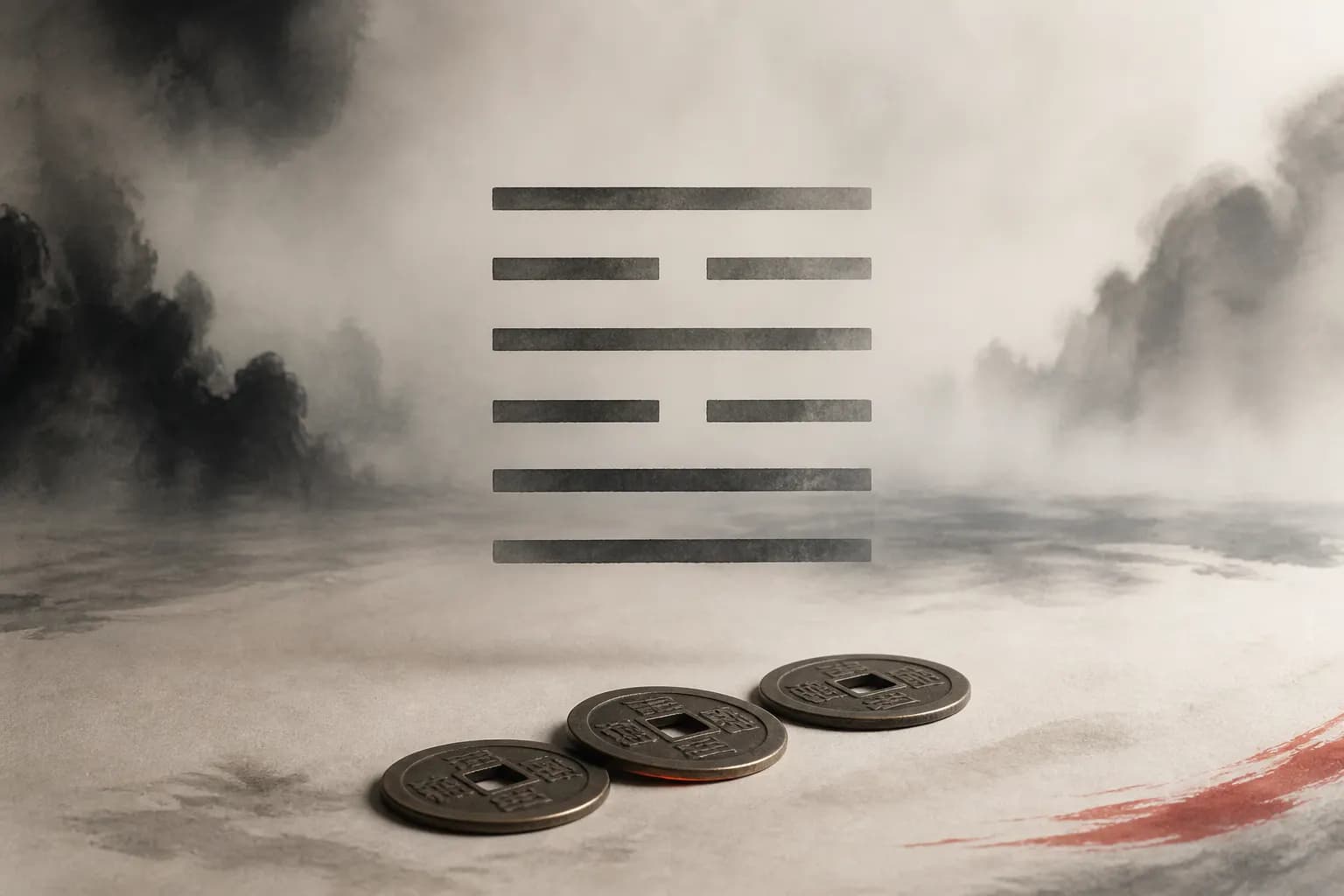
摇完六次铜钱,装好卦,六亲排好,用神找准了——然后你发现卦里有动爻。
很多人的第一反应是紧张。"动了是不是不好?""动了是不是要变?""动了是不是出事了?"
不会。动爻只是卦里那几根正在变化的爻。它不预告吉凶,它告诉你**事情在哪里在变**。吉凶要看变的方向,不是变这个动作本身。
这篇文章讲清楚三件事:动爻是什么、动爻变出什么、以及这些变化对断卦意味着什么。
动爻的本质:阴阳的极点在转换
摇卦用三枚铜钱,每摇一次有四种结果:
| 结果 | 名称 | 含义 |
|---|---|---|
| 三字 | 老阴 ⚋× | 阴之极,要变阳 → **动爻** |
| 三背 | 老阳 ⚊○ | 阳之极,要变阴 → **动爻** |
| 两字一背 | 少阳 ⚊ | 阳,稳定 → 静爻 |
| 两背一字 | 少阴 ⚋ | 阴,稳定 → 静爻 |
老阴、老阳之所以叫"老",是因为它们走到了极端。物极必反——走到极端就一定要变化。所以它们叫动爻:不是"出问题",是"到了转折点"。
动爻会从阴变阳或者从阳变阴,变出来的那根爻叫**变爻**。原卦加上变爻组成的新卦叫**变卦**(也叫之卦)。
整件事的逻辑链是这样的:
1. 你摇出老阳或老阴 → 某爻动了 2. 动爻变成相反的阴阳 → 产生变爻 3. 变爻有自己的地支、五行、六亲 → 引入新的信息 4. 这条新信息和原卦的信息叠加 → 构成完整的判断依据
所以动爻不是一个信号灯——红绿灯才简单。动爻更像是一份追加证据。原来的卦是案情概述,动爻是新提交的证物。证物本身不替你下结论,但它改变了你对案情的理解。
没有动爻的卦:静卦
六个爻全是少阴少阳,一个都没动,这叫**静卦**。
静卦不等于"没有信息"。它的信息模式不同:用神的旺衰、月建日辰的作用、卦象本身的结构,这些已经够你判断了。静卦说的是**当前局势相对稳定**,短期内没有明显的转折力量在推动变化。
古人说"不动不占,不动不断",这话有道理,但别理解过头。它说的是:没有动爻时,你断卦的焦点不在"变",而在"状态"。用神旺不旺?有没有被月建克?世应关系好不好?这些才是静卦的判断重点。
有动爻和没有动爻,区别在于**分析维度**不同,不在于好坏。
动爻的数量:从独发到全动
动爻的数量直接决定分析的复杂度。
独发:只有一个动爻
独发是最清晰的情况。古人说"独发为尊"——唯一那个动的爻,就是事情的关键。
断独发很简单,核心就一个问题:**这个动爻和用神是什么关系?**
- 动爻生用神 → 有助力 - 动爻克用神 → 有阻力 - 动爻就是用神 → 用神自己发动,事情主动权在你手里 - 动爻生世爻 → 外部条件对你有利 - 动爻克世爻 → 外部条件对你不利
同时还要看动爻本身的状态:旺相的动爻作用力大,休囚的动爻作用力小。还要看动爻变出什么——这部分后面细说。
多发:两个以上动爻
两个或更多爻动了,局势就复杂了。多个动爻之间会互相生克、互相牵制,你需要分清楚谁是主角谁是配角。
多发卦的判断顺序:
1. **先找用神**,用神永远是最重要的。 2. 看哪个动爻和用神关系最直接——这就是主角。 3. 看各动爻的旺衰——旺相的权重更高。 4. 看动爻之间的生克链——A克B、B生C,理清因果。
多说一句:六爻全动的情况极少见。如果真摇出来了,一般按朱熹《易学启蒙》的方法处理(阴阳各自分占),但那已经超出本篇的范围了。
动爻变出什么:化变的四种基本类型
动爻变成变爻之后,变爻会对动爻产生不同方向的影响。这是动变分析的核心。
化进神:力量增强
当变爻和动爻**五行相同**,且变爻的地支比动爻"更往前走一步"时,叫化进神。
标准四组:
| 动爻 → 变爻 | 五行 | 进退 |
|---|---|---|
| 亥 → 子 | 水 | 进 |
| 寅 → 卯 | 木 | 进 |
| 巳 → 午 | 火 | 进 |
| 申 → 酉 | 金 | 进 |
化进的含义:**力量在增强,趋势在往前走。**
- 用神化进 → 事情越来越有利 - 原神化进 → 助力越来越强 - 忌神化进 → 阻力越来越大(要警惕)
但有个关键细节:**化进要看动爻本身旺不旺。** 动爻本身旺相,化进是真进——锦上添花。动爻本身休囚,化进是假进——病弱之人想跑步,心有余力不足。
化退神:力量减弱
和化进相反,变爻和动爻同五行,但地支往后退一步。
| 动爻 → 变爻 | 五行 | 进退 |
|---|---|---|
| 子 → 亥 | 水 | 退 |
| 卯 → 寅 | 木 | 退 |
| 午 → 巳 | 火 | 退 |
| 酉 → 申 | 金 | 退 |
化退的含义:**力量在减弱,趋势在往后缩。**
- 用神化退 → 事情不如预期 - 原神化退 → 助力在消退 - 忌神化退 → 反而是好事,凶势在减
同样要分真假:旺爻化退是假退——老虎掉了一根毛,还是老虎。休囚之爻化退是真退——雪上加霜。
化空:变化落空
动爻变出的变爻恰好落在旬空亡上,叫**化空**。
化空的意思是:**变化的结果暂时无法落实。** 注意是"暂时"。空亡不是永远消失,是"还没到时候"。等到出空的那一天(空亡的地支被填实或被冲开),变爻的作用就会恢复。
这里有一个重要的原则:**动不为空。** 动爻本身即使逢空,因为它已经发动了,仍然有生克他爻的能力。但变爻化空,变爻那边的效果暂时搁浅。
- 用神化空 → 事情目前不成,等出空 - 原神化空 → 助力暂时不到位 - 忌神化空 → 先松口气,但出空后还是要防
化墓:力量被束缚
动爻变出的变爻恰好是动爻五行的墓库,叫**化墓**。
五行墓库:
| 五行 | 墓库 |
|---|---|
| 水 | 辰 |
| 木 | 未 |
| 火 | 戌 |
| 金 | 丑 |
| 土 | 辰(主) |
化墓不是死,是"被关起来了"。力量还在,但施展不出来。就像一个人进了仓库——不是不存在,是出不来。
- 用神化墓 → 事情被阻碍、被拖延 - 忌神化墓 → 坏事暂时发作不了,反而是好事
墓也分真假。旺爻化墓是假墓——强壮的人被暂时关住,冲开就恢复。休囚之爻化墓是真墓——本来就弱,关起来可能真就出不来了。
回头生与回头克:变爻对动爻的直接作用
除了化进退、化空墓这几种"同五行"或"特殊状态"的变化之外,变爻最常见的用法是**回头生**和**回头克**。
回头生
变爻的五行**生**动爻的五行,叫回头生。
比如:亥水动,变出寅木。木生水——不对,是水生木。换个例子:申金动,变出辰土。土生金,这就是回头生。
回头生的意思是:**动爻发动之后,反而得到了增强。** 本来发动已经是一件有力量的行为,变爻又回头来生它,等于加了一层buff。
- 用神动化回头生 → 大吉。用神本来就有作为,还被加持了。 - 原神动化回头生 → 助力不仅有,而且持续增强。
回头克
变爻的五行**克**动爻的五行,叫回头克。
比如:寅木动,变出申金。金克木,这就是回头克。
回头克的意思:**动爻发动之后,反而被削弱甚至抵消了。** 本来发动是为了推动变化,结果变化的方向反过来消耗了自己。相当于你冲出去打架,结果发现后院起火了。
- 用神动化回头克 → 大凶。用神本来想做点事,但自己被消解了。 - 忌神动化回头克 → 反而是好事。坏力量自己把自己消耗掉了。
回头生和回头克是动变分析中**判断力最强的两个信号**,比化进退更直观。断卦时一定要先看有没有回头生克——如果有,它的优先级高于一般的生克关系。
暗动:没被标记的动爻
除了摇卦时直接摇出来的老阴老阳(明动),还有一种"看不见"的动爻叫**暗动**。
暗动的条件:
1. 该爻是静爻(没有老阴老阳标记) 2. 日辰的地支和该爻的地支构成**六冲关系** 3. 该爻**旺相**(得月建生扶或本身当令)
三个条件缺一不可。旺相的静爻被日辰一冲,暗中就"动"了;休囚的静爻被冲,不是暗动,是**日破**——根基被摧毁。
《增删卜易》说得很清楚:"旺相之爻,日冲为暗动;休囚之爻,日冲为日破。"
暗动的效果介于静爻和明动之间:它可以生克其他爻,但力量不如明动。它代表的是**潜在的变化力量**——还没表面化,但在暗中推进。
- 用神暗动 → 事情暗中在推进,有机转 - 忌神暗动 → 危险暗中在积累,要警惕
暗动没有变爻,所以不涉及化进退、回头生克这些后续变化。它只多了一步"能生克他爻"的能力。
动而逢合:被绊住的动爻
动爻如果被月建、日辰或者另一个动爻**合住**,就叫动而逢合,也叫**绊住**。
合住的意思是:动爻想发挥作用,但被暂时拖住了。就像人要出门,脚被绳子缠住了——不是走不了,是暂时走不了。
被合住的动爻,生克之力暂时不能发挥。但合不是克,合住不等于合死。等到**冲开合**的那一天(比如子丑合,遇未日就冲开了),被绊住的动爻就会恢复自由,重新发力。
动而逢合在应期判断中特别有用:它直接告诉你,事情要等到某个时间点才能突破。
一个完整的工作流程
面对一个有动爻的卦,我建议按这个顺序分析:
**第一步:定位用神。** 这永远是第一步。没有用神,动爻的吉凶没有参照物。
**第二步:看用神本身动没动。** 用神如果发动,说明你问的事情处于主动变化中——好事主动推进或坏事主动恶化,看旺衰和化变。
**第三步:看动爻和用神的关系。** 其他动爻是生用神还是克用神?有没有原神发动来帮忙?有没有忌神发动来捣乱?
**第四步:看每个动爻的化变。** 化进还是化退?回头生还是回头克?化空还是化墓?这些细节决定了变化的质量。
**第五步:看有没有暗动和逢合。** 暗动的爻有没有影响局势?动爻有没有被绊住?这些"隐变量"经常是初学者忽略的。
**第六步:综合判断,得出结论。** 不要孤立地看任何一个因素。动爻是线索,是证据,但最终判断要看所有线索拼出来的完整画面。
最常见的误解
写到最后,还是要把开头那句话再说一遍:**动爻是证据,不是恐吓。**
具体来说,初学者最容易犯这几个错:
**"动了就是不好"** —— 完全没有这回事。用神化回头生、原神独发生用神,这些动爻都是好消息。动爻只是告诉你事情在变,至于变好还是变坏,要看变化的方向。
**"动爻比静爻重要,所以只看动爻"** —— 不对。用神如果是静爻但旺相临月建,它的状态可能比一个休囚的动爻更关键。动静是分析维度之一,不是唯一的维度。
**"化进一定好,化退一定差"** —— 不考虑真假进退就是胡断。休囚之爻化进是假进,旺相之爻化退是假退,不能只看字面。
**"变爻比动爻重要"** —— 不对。动爻是因,变爻是果。没有因就没有果。如果动爻本身被日冲而散,变爻再好也发挥不出来。
动爻不是卦里的危险信号。它是一扇打开的窗户——让你看到事情在哪里在变、往什么方向变、变化的力度有多大。剩下的事,用你学过的旺衰判断和六亲关系去综合分析就够了。
六爻的每一次摇卦都是一次信息的采集。动爻是这套信息系统里最活跃的变量。尊重它,分析它,但不要怕它。