
Life-Pattern Learning Map
Learn Bazi, Liuyao, and time correction from real questions; see the structure and keep your judgment.
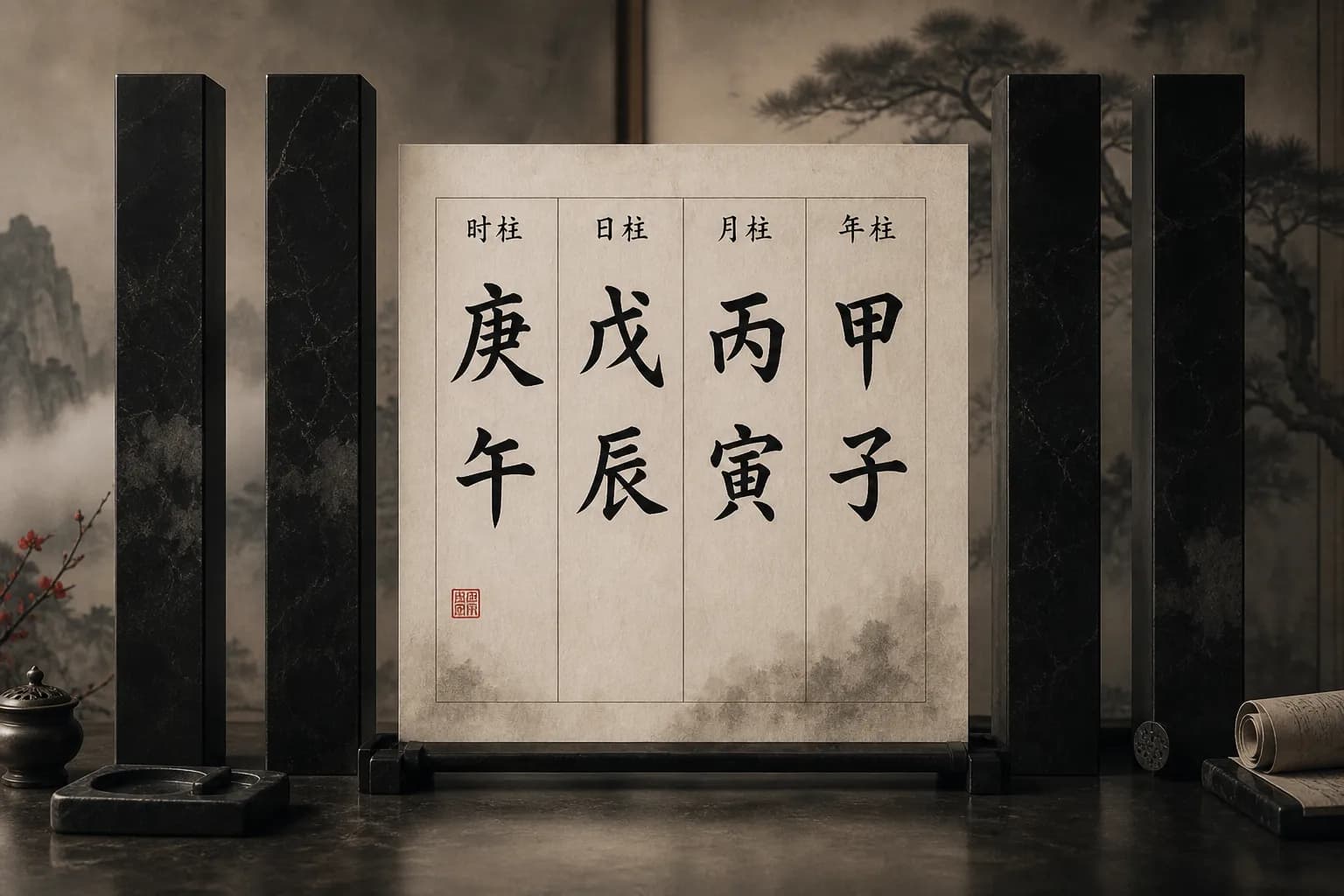
Bazi
How to Read the Five Elements
Use cycles, seasonal strength, and chart context to read the atmosphere of a Bazi chart.
Bazi
How to Use Shen Sha Without Fatalism
Treat symbolic stars as supporting clues, with lookup rules, placement, and clear limits.
Bazi
Day Master in Bazi — 10 Day Masters Explained
The Day Master is the Heavenly Stem of your day pillar — your chart's self-reference point. Browse the ten stems by pattern, not verdict.
Bazi
Heavenly Stems Basics: What Jia Through Gui Represent
Read stems through yin-yang, Five Elements, combination, and their role inside the chart.
Bazi
How to Read Earthly Branches: Direction, Season, and Hidden Stems
Read branches as timing, place, hidden stems, and relationship layers, not just zodiac labels.
Bazi
How to Build the Sixty Jiazi Cycle
See how stems and branches form sixty time coordinates and how they support Four Pillars charts.
Bazi
How to Read Nayin: Another Layer of the Sixty Jiazi
Use Nayin as symbolic texture and time quality, while keeping it distinct from primary Five Elements.
Bazi
How to Read the Ten Gods From the Day Master
Use peers, output, wealth, officer, and seal roles to map resources, pressure, and expression.
Bazi
How to Read Bazi Patterns: Find the Main Line First
Learn regular and variant pattern conditions without treating the pattern name as a life label.
Bazi
How Branch Interactions Trigger Change
Use clash, combination, punishment, harm, and meetings to read chart movement without forcing events.
Bazi
How to Read Da Yun: Ten-Year Phases Are Not Commands
Understand start age, transition periods, annual triggers, and phase themes without fixed verdicts.
Time correction
When Does Da Yun Start?
Use solar terms, forward or reverse sequence, and conversion rules before interpreting the phase.
Time correction
Can True Solar Time Change a Chart?
When birth time is near an hour boundary, check longitude, time zone, and daylight saving rules first.
Time correction
How to Handle Zi Hour Around 23:00
The Zi hour runs 23:00–01:00, crossing midnight. Here is how the early-Zi and late-Zi schools decide your BaZi day pillar.
Liuyao
How to Start Reading the 64 Hexagrams
Begin with upper and lower trigrams, line positions, and change patterns as a frame for questions.
Liuyao
How to Set Najia in a Liuyao Hexagram
Place stems and branches onto each line before reading six relations, Shi-Ying, and useful lines.
Liuyao
How to Read Six Relations in Liuyao
Use Five Element relationships to locate parents, siblings, descendants, wealth, and officials.
Liuyao
How to Place Shi and Ying in Liuyao
Locate the querent, the other side, and the situation before judging movement or outcome.
Liuyao
How to Assign the Six Spirits
Use Qing Long, Zhu Que, Gou Chen, and the other spirits as context clues, not standalone verdicts.
Compare
System Comparisons
Honest side-by-side guides across Chinese and Western astrology, BaZi, and related traditions — with method, limits, and free tools to try both.