How to Assign the Six Spirits
Use Qing Long, Zhu Que, Gou Chen, and the other spirits as context clues, not standalone verdicts.
Overview
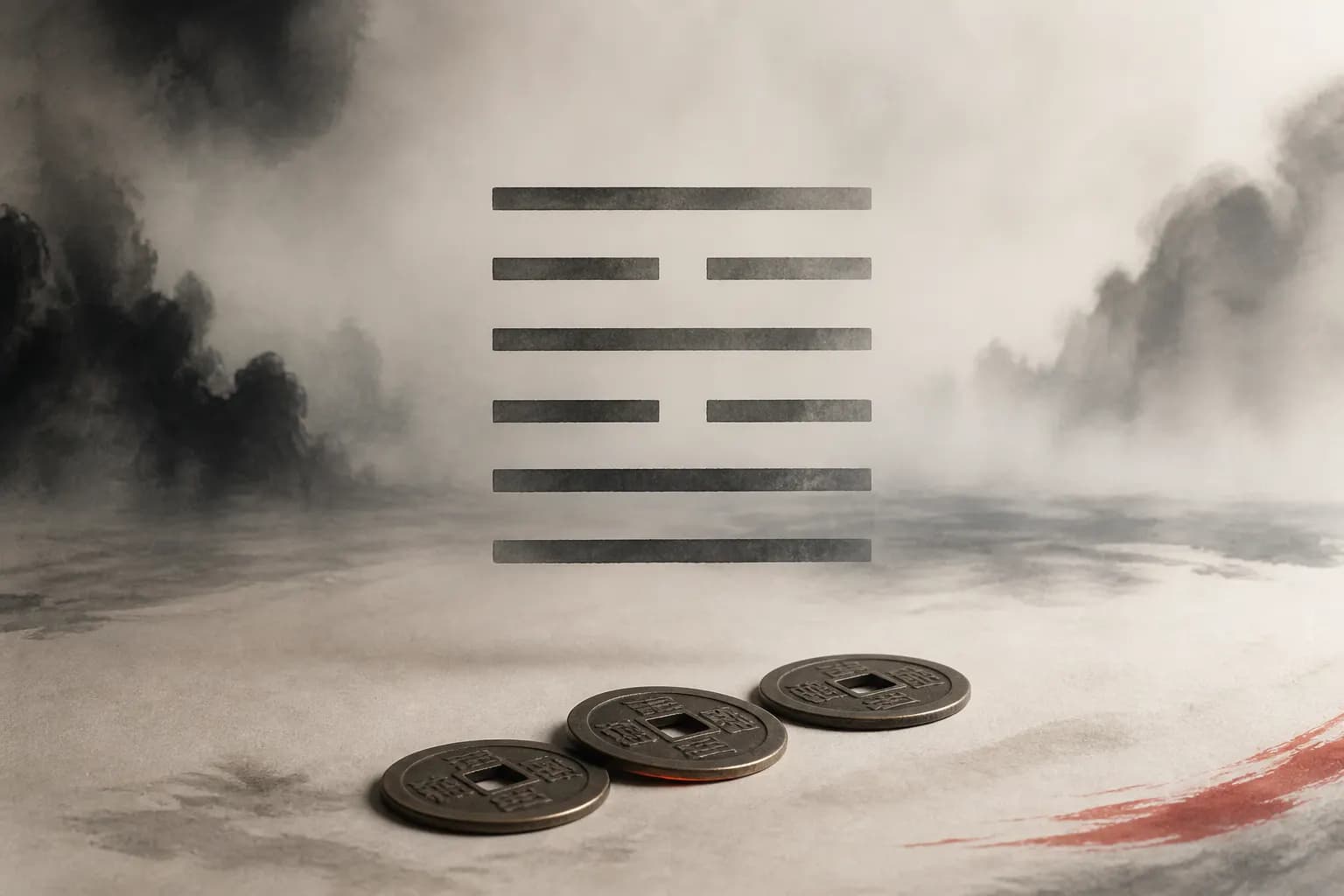
The Six Spirits (Liu Shen) are an auxiliary judgment system in Six Yao (Liu Yao) prediction. They include six divine beasts: Qing Long (Azure Dragon), Zhu Que (Vermilion Bird), Gou Chen (Hooked Array), Teng She (Flying Serpent), Bai Hu (White Tiger), and Xuan Wu (Black Tortoise), assigned sequentially to the six Yao of the hexagram. The Six Spirits are not an essential component of the hexagram image but an auxiliary information layer attached to the Yao, used to enhance the detail and vividness of divination. The arrangement of the Six Spirits is determined by the Heavenly Stem of the day on which the divination is performed. Different day stems cause the positions of the Six Spirits in the hexagram to change accordingly. Each Spirit has unique symbolic meanings and properties, playing an important role in depicting the characteristics of a matter and indicating details of auspiciousness or inauspiciousness.
Concept and Arrangement Method of the Six Spirits
The Six Spirits are Qing Long, Zhu Que, Gou Chen, Teng She, Bai Hu, and Xuan Wu, originating from the worship of constellations in ancient astronomy and later incorporated into the numerology system. The arrangement of the Six Spirits uses the day stem as the benchmark, following a fixed cyclic order. On Jia and Yi days, Qing Long is the starting Spirit; on Bing and Ding days, Zhu Que; on Wu days, Gou Chen; on Ji days, Teng She; on Geng and Xin days, Bai Hu; on Ren and Gui days, Xuan Wu. The Yao where the starting Spirit is placed becomes the first of that day's corresponding Six Spirits, and then the sequence Qing Long, Zhu Que, Gou Chen, Teng She, Bai Hu, Xuan Wu is assigned from the first Yao to the top Yao in order. For example, on a Jia day divination, Qing Long is at the first Yao, Zhu Que at the second, Gou Chen at the third, Teng She at the fourth, Bai Hu at the fifth, and Xuan Wu at the top Yao.
Symbolic Meaning and Nature of Qing Long
Qing Long belongs to Wood, positioned in the East, and is the head of the Six Spirits. It symbolizes auspiciousness, joy, integrity, and kindness. Qing Long governs happy events, wealth, marriage, childbirth, gains, and all beautiful things. When corresponding to the Official Ghost Yao, it indicates an upright official or pressure within joy. When corresponding to the Wealth Yao, it indicates legitimate wealth or marriage wealth. When corresponding to the Parent Yao, it indicates joyful documents or elder's blessing. When corresponding to the Sibling Yao, it indicates benign competition or help from friends. When corresponding to the Descendant Yao, it indicates adding children or joyful news arriving. Active Qing Long mostly indicates auspicious celebrations, but it must be combined with the flourishing or declining state of the Yao and the corresponding Six Relatives for comprehensive judgment, and cannot be generalized. Although Qing Long is auspicious, if it corresponds to an unfavorable spirit and becomes active, it may also indicate sorrow after joy.
Symbolic Meaning and Nature of Zhu Que
Zhu Que belongs to Fire, positioned in the South, and symbolizes speech, documents, information, verbal disputes, and right-wrong conflicts. Zhu Que governs literature, edicts, letters, examinations, litigation, quarrels, and all matters related to language and writing. When corresponding to the Parent Yao, it indicates documents and edicts or academic examinations. When corresponding to the Official Ghost Yao, it indicates verbal lawsuits or official documents. When corresponding to the Sibling Yao, it indicates verbal disputes or quarrels among friends. When corresponding to the Wealth Yao, it indicates disputes arising from wealth. When corresponding to the Descendant Yao, it indicates relaxed speech or spreading joyful news. Active Zhu Que mostly indicates verbal matters, whether auspicious or inauspicious depends on the corresponding Six Relatives. A flourishing Zhu Que indicates elegant and beautiful writing; a weak Zhu Que indicates weak speech or erroneous documents.
Symbolic Meanings of Gou Chen and Teng She
Gou Chen belongs to Earth, positioned in the Center, and symbolizes delay, entanglement, land, imprisonment, and old matters. Gou Chen governs delays, obstacles, farmland, imprisonment, revisiting old matters, and unclear entanglements. When corresponding to the Official Ghost Yao, it indicates imprisonment disasters or chronic diseases. When corresponding to the Parent Yao, it indicates old documents or real estate matters. When corresponding to the Sibling Yao, it indicates entanglement by friends or受阻 cooperation. When corresponding to the Wealth Yao, it indicates land wealth or stagnant wealth. When corresponding to the Descendant Yao, it indicates delayed medical effects or受阻 juniors. Teng She also belongs to Earth and is positioned in the Center, symbolizing false alarms, strangeness, entanglement, change, and secrecy. Teng She governs panic and unease, strange dreams and false alarms, endless entanglement, secret schemes, and strange matters. When corresponding to the Official Ghost Yao, it indicates false alarm illnesses or secret陷害. When corresponding to the Parent Yao, it indicates strange documents or worried elders. When corresponding to the Sibling Yao, it indicates secret schemes by friends or entangled disputes. When corresponding to the Wealth Yao, it indicates secret wealth or wealth-related fright. When corresponding to the Descendant Yao, it indicates worried juniors or strange medicine. Gou Chen governs tangible obstacles, while Teng She governs intangible alarms.
Symbolic Meanings of Bai Hu and Xuan Wu
Bai Hu belongs to Metal, positioned in the West, and symbolizes danger, injury, bloodshed, sudden illness, and punishment. Bai Hu governs凶伤, diseases, bloodshed, funerals, fights, and all dangerous matters. When corresponding to the Official Ghost Yao, it indicates serious illness, disasters, or punishment calamities. When corresponding to the Parent Yao, it indicates elder's illness or funerals. When corresponding to the Sibling Yao, it indicates fights and competition or injured friends. When corresponding to the Wealth Yao, it indicates wealth-related disasters or wife's illness. When corresponding to the Descendant Yao, it indicates injured juniors or bloody medical treatment. Xuan Wu belongs to Water, positioned in the North, and symbolizes secrecy, theft, ambiguity, deception, and concealment. Xuan Wu governs theft, secrecy, conspiracy, deception, hidden affairs, and wine and lust—all secretive matters. When corresponding to the Official Ghost Yao, it indicates theft or hidden disasters. When corresponding to the Parent Yao, it indicates fraudulent documents or elder's secrecy. When corresponding to the Sibling Yao, it indicates deception by friends or secret competition. When corresponding to the Wealth Yao, it indicates secret wealth or unfaithful wives. When corresponding to the Descendant Yao, it indicates hidden affairs of juniors or unclear medicine. Bai Hu governs overt danger, while Xuan Wu governs covert secrecy.
Auxiliary Role of the Six Spirits in Divination
The Six Spirits play an auxiliary reference role in Six Yao divination and cannot be judged in isolation from the core factors such as Six Relatives, flourishing or declining state, and generation-restriction. The main value of the Six Spirits lies in increasing the vividness and detail of divination, helping the diviner depict the nature and characteristics of a matter more concretely. For example, seeking wealth with Qing Long corresponding to the Wealth Yao indicates legitimate wealth coming joyfully; if Xuan Wu corresponds to the Wealth Yao, one must guard against deception or secret wealth. In illness prediction, Bai Hu corresponding to the Official Ghost Yao indicates serious illness or risk of bloodshed; Teng She corresponding to the Official Ghost Yao indicates false alarm illness or mental unease. The correspondence between the Six Spirits and the Five Elements is: Qing Long belongs to Wood, Zhu Que to Fire, Gou Chen and Teng She to Earth, Bai Hu to Metal, and Xuan Wu to Water. This attribute allows the Six Spirits to participate in Wuxing generation-restriction analysis, further enriching the layers of divination.