Ding (Yin Fire 丁)
Focused, intimate, steady — the candle pattern
The day stem reads 丁 — a Ding day master, Yin Fire in BaZi's ten-stem set. If you searched "ding day master" or "yin fire day master," you likely want pattern language rather than a fortune headline. Within this system, Ding is the self-reference stem on your day pillar, often imaged as a candle: warmth at close range, light that holds when tended. That metaphor may suggest focus and sensitivity to atmosphere, but only alongside season, strength, and the other seven characters. Verify your stem with a free Four Pillars chart before reading further.
What is the Ding (Yin Fire 丁) day master?
Your Day Master is the Heavenly Stem on the day pillar — the reference for Ten Gods and strength analysis. Ding (丁) is Yin Fire, traditionally imaged as lamp or candle flame: heat that is localized, attentive, and vulnerable to wind. Classical discussion uses Ding for intimacy, craft, and inner clarity rather than stadium-scale radiance — always as pattern, never as fate. See Heavenly Stems for where stems sit in all pillars and Ten Gods for roles read from the Day Master.
丁火柔中,内性昭融。
— 滴天髓
How to find your Day Master
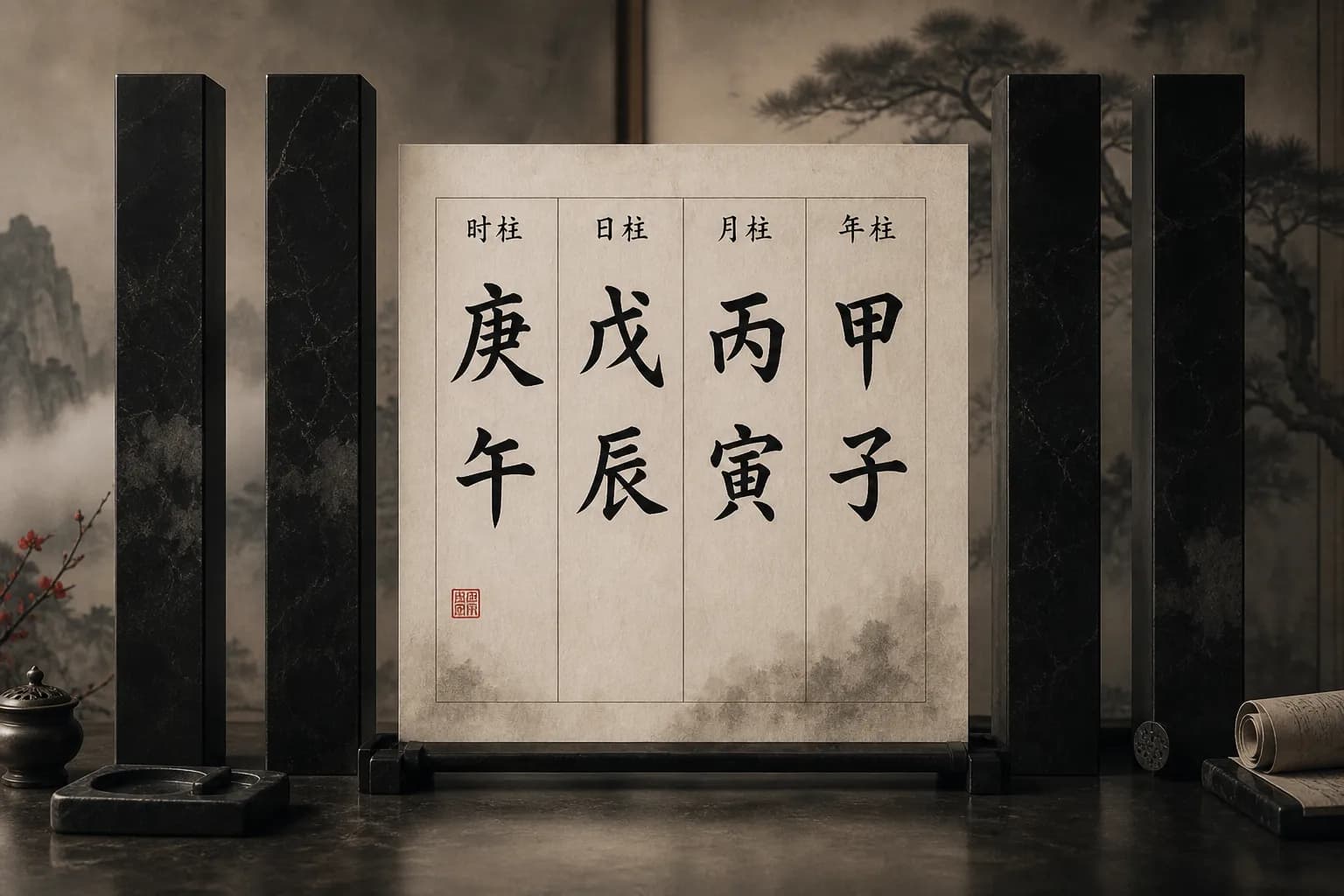
Within this system, finding your Day Master takes three steps: (1) generate your Four Pillars chart from birth date and time; (2) locate the day pillar — the third column, marked Day; (3) read its Heavenly Stem (top character). That stem is your Day Master. Unlike the year branch (shared by everyone born that year), the day stem is one of the chart's most individual anchors — though month and hour can still coincide with others. For Ten Gods and full structure, use the Four Pillars tool.
The candle flame: the core pattern
The candle image points to a pattern of concentrated warmth within this system. Tradition may suggest Ding Day Masters tend to invest deeply in a smaller circle, notice emotional temperature in a room, and prefer meaningful presence over broad performance. When the chart lacks supportive Wood or balanced Water, the same flame can read as anxiety about being blown out — hyper-attentive to criticism or quick to dim when environments turn harsh. The archetype invites observation, not a requirement to stay small.
Strengths and friction points
Supported Yin Fire often reads as loyalty, aesthetic sensitivity, and ability to sustain effort on long, detailed work. Friction appears when external judgment feels like wind: mood swings tied to approval, difficulty resting when the flame "should" stay lit, or resentment when intimate giving is taken for granted. Ding charts sometimes show quiet devotion alongside pride in craft — warmth that withdraws when mishandled. These paired tendencies are context-dependent, not diagnoses.
Ding (Yin Fire 丁) in career and work
Career symbolism may favor settings where precision, mentorship, or trusted specialist roles matter — work that rewards depth and reliability over constant stage time. Tradition may indicate drain in hyper-critical cultures with no safe feedback loop, or roles where visibility is mandatory but authenticity is punished. A Ding Day Master in a strong Wood chart might read as creative and steady; in overwhelming Water, the same stem might feel dampened or privately burning. Describe fit as pattern, not prescription.
Ding (Yin Fire 丁) in relationships
Ding traditionally combines with Ren Yang Water (丁壬合) — candle and great river, often described as focused warmth meeting depth. That is symbolic pairing language, not a matchmaking rule. For serious pairing use relationship chart analysis. Compared with Bing Yang Fire (the sun), Ding may read as more intimate and selective in affection style — see the Bing guide for the Yang Fire contrast.
When the rest of the chart changes the picture
Two Ding Day Masters can read oppositely: one with balanced Wood and gentle Water may present as warm, artful, and resilient; one with harsh Metal or flooded Water may experience the same stem as fretful, withdrawn, or exhausted by scrutiny. Season, Day Master strength, and luck cycles can invert the candle metaphor entirely. Cross-check Five Elements and Day Master method depth; remember the Day Master is one character in eight.
The day master is a reference point, not a verdict — the reading is yours to use.
FAQ
Is Ding a good day master?
No Day Master is ranked good or bad within this system. Ding names a Yin Fire pattern; how it feels depends on chart balance, season, and interactions — not the label alone.
How do I know if I'm a Ding day master?
After you generate your chart, read the Heavenly Stem on the day pillar. 丁 means Ding Day Master.
How is Ding (Yin Fire) different from Bing (Yang Fire)?
Bing is the sun — broad, steady radiance; Ding is the candle — focused, intimate warmth. See the Bing Fire guide for the Yang Fire contrast; your chart modulates which fire story is louder.
What element is Ding?
Ding is Yin Fire. See the Four Pillars chart or Heavenly Stems for full pillar context.