
Ji (Yin Earth 己)
Cultivating, nourishing, receptive — the garden soil pattern
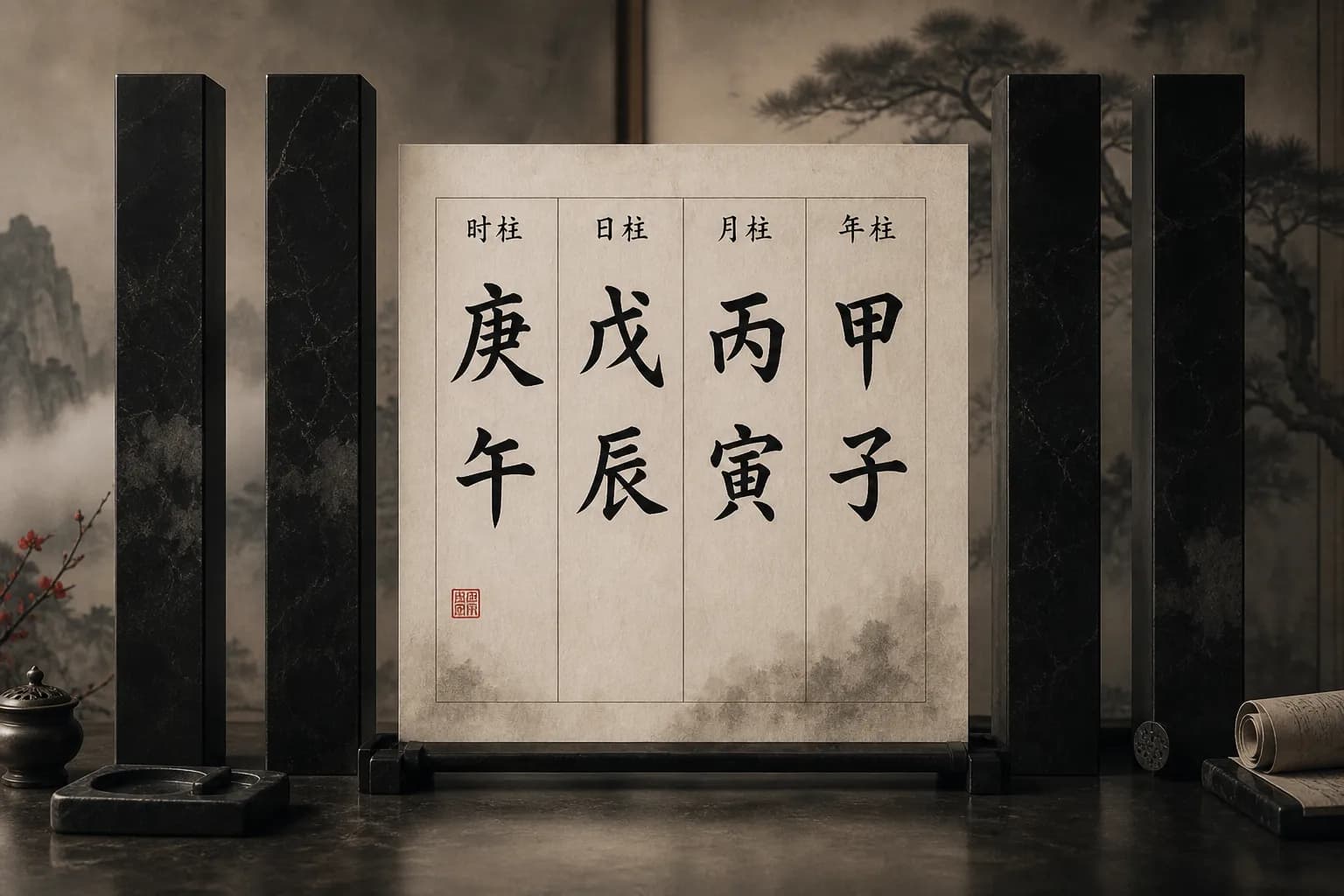
The day stem reads 己 — a Ji day master, Yin Earth in BaZi's ten-stem set. If you searched "ji day master" or "yin earth day master," you likely want pattern language rather than a fixed personality verdict. Within this system, Ji is the self-reference stem on your day pillar, often imaged as garden soil or farmland: earth that grows what is planted in it. That metaphor may suggest cultivation, care, and quiet productivity, but only alongside season, strength, and the other seven characters. Verify your stem with a free Four Pillars chart before reading further.
What is the Ji (Yin Earth 己) day master?
Your Day Master is the Heavenly Stem on the day pillar — the reference for Ten Gods and strength analysis. Ji (己) is Yin Earth, traditionally imaged as soft soil, fields, or clay: earth that receives, holds moisture, and supports growth. Classical discussion uses Ji for nurture, mediation, and practical service rather than monumental display — always as pattern, never as fate. See Heavenly Stems for where stems sit in all pillars and Ten Gods for roles read from the Day Master.
己土卑湿,中正蓄藏。
— 滴天髓
How to find your Day Master
Within this system, finding your Day Master takes three steps: (1) generate your Four Pillars chart from birth date and time; (2) locate the day pillar — the third column, marked Day; (3) read its Heavenly Stem (top character). That stem is your Day Master. Unlike the year branch (shared by everyone born that year), the day stem is one of the chart's most individual anchors — though month and hour can still coincide with others. For Ten Gods and full structure, use the Four Pillars tool.
The garden soil: the core pattern
The garden-soil image points to a pattern of cultivation within this system. Tradition may suggest Ji Day Masters tend to improve conditions for others, notice what needs feeding, and work steadily behind visible leadership. When the chart lacks boundaries or is over-harvested by demanding elements, the same soil can read as depletion — giving until empty, or absorbing conflict without naming it. The archetype invites observation of how you tend your own field, not a requirement to serve endlessly.
Strengths and friction points
Supported Yin Earth often reads as patience, practical care, and ability to make groups feel held. Friction appears when soil is over-plowed: difficulty refusing requests, resentment when effort stays invisible, or losing shape because every relationship expects you to adapt. Ji charts sometimes show generous nurture alongside quiet exhaustion — fertile ground that forgets to rest. These paired tendencies are context-dependent, not diagnoses.
Ji (Yin Earth 己) in career and work
Career symbolism may favor settings where support, training, operations, or quality cultivation matter — work that rewards steady improvement over dramatic launches. Tradition may indicate drain in extractive cultures that take without replenishing, or roles where credit always flows upward while maintenance work stays unseen. A Ji Day Master with balanced Fire might read as warm and organizing; with overwhelming Water, the same stem might feel soggy or overwhelmed. Patterns, not job titles.
Ji (Yin Earth 己) in relationships
Ji traditionally combines with Jia Yang Wood (甲己合) — garden soil and tall tree, often described as nurture meeting structure. Explore serious pairing through relationship chart analysis, not stem labels alone. Compared with Wu Yang Earth (mountain), Ji may read as more receptive and adaptive in relational style — see the Wu guide for the Yang Earth contrast.
When the rest of the chart changes the picture
Two Ji Day Masters can read oppositely: one with season support and gentle Fire may present as thoughtful, reliable, and quietly influential; one with harsh Metal or dry Wood may experience the same stem as anxious, over-accommodating, or depleted from constant adjustment. Season, Day Master strength, and luck cycles can invert the soil metaphor entirely. Cross-check Five Elements and Day Master method depth; remember the Day Master is one character in eight.
The day master is a reference point, not a verdict — the reading is yours to use.
FAQ
Is Ji a good day master?
No Day Master is ranked good or bad within this system. Ji names a Yin Earth pattern; how it feels depends on chart balance, season, and interactions — not the label alone.
How do I know if I'm a Ji day master?
After you generate your chart, read the Heavenly Stem on the day pillar. 己 means Ji Day Master.
How is Ji (Yin Earth) different from Wu (Yang Earth)?
Wu is the mountain — bearing and immovable mass; Ji is garden soil — cultivating and adaptive. See the Wu Earth guide for the Yang Earth contrast; your chart modulates which earth story is louder.
What element is Ji?
Ji is Yin Earth. See the Four Pillars chart or Heavenly Stems for full pillar context.