
Yi (Yin Wood 乙)
Flexible, adaptive, quietly resilient — the vine pattern
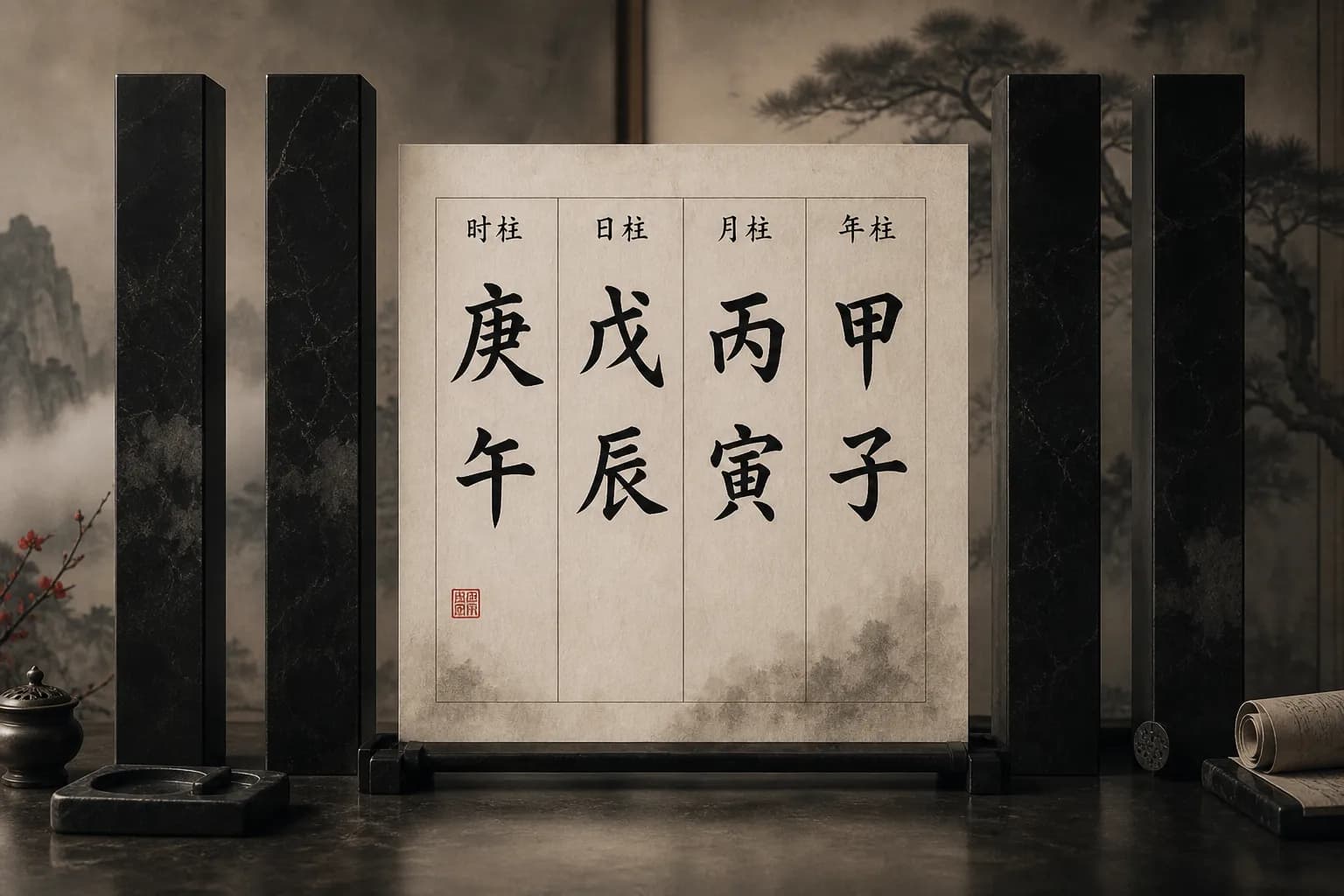
Your day pillar shows 乙 — a Yi day master, Yin Wood among the ten Heavenly Stems. Searches for "yi day master" or "yin wood day master" often mix vine metaphors with fixed personality labels; within this system, Yi is only your chart's self-reference stem. Tradition may suggest themes of adaptation and quiet persistence, but season, strength, and the other seven characters always co-write the story. Confirm the stem on a free Four Pillars chart, then read how the climbing-vine image tends to be used as pattern language.
What is the Yi (Yin Wood 乙) day master?
The Day Master is the Heavenly Stem on your day pillar — the anchor from which Ten Gods and strength readings are taken. Yi (乙) is Yin Wood, classically imaged as flowers, grass, or a climbing vine: growth that bends, attaches, and finds light without always standing alone. Classical texts use Yi to discuss flexibility, tactical patience, and strength that does not look like force — always as tendency, not identity. For stem mechanics in all four pillars see Heavenly Stems; for roles generated from the Day Master see Ten Gods.
乙木虽柔,刲羊解牛。
— 滴天髓
How to find your Day Master
Within this system, finding your Day Master takes three steps: (1) generate your Four Pillars chart from birth date and time; (2) locate the day pillar — the third column, marked Day; (3) read its Heavenly Stem (top character). That stem is your Day Master. Unlike the year branch (shared by everyone born that year), the day stem is one of the chart's most individual anchors — though month and hour can still coincide with others. For Ten Gods and full structure, use the Four Pillars tool.
The climbing vine: the core pattern
The vine image maps to a core pattern within this system: movement that prefers routes over confrontation, growth that uses structure rather than only building it. Tradition may suggest Yi Day Masters tend to read situations quickly, adjust tone, and persist through indirect effort — softness that can still cut through difficulty when the chart supports it. The same stem in a dry, exposed chart might read as over-accommodation or thin boundaries rather than graceful adaptability. The image is a handle for reflection, not a verdict on weakness.
Strengths and friction points
When Yin Wood qi is supported, readings may highlight tact, recovery after setback, and ability to nurture connections across factions. The friction side is visibility: vines can be mistaken for "only supporting" roles, and flexibility without roots may read as inconsistency or difficulty saying no. Tradition pairs adaptability with boundary risk — helpful in negotiation, draining when every relationship expects you to bend. These are patterned tendencies to notice against season and the other seven characters, not moral scores.
Yi (Yin Wood 乙) in career and work
In work settings, Yi patterns may suggest environments where coordination, craft, or relationship bridges matter — spaces that reward reading the room rather than only issuing commands. Tradition may indicate strain in cultures that punish nuance or demand constant public ownership of credit, where indirect contribution stays invisible. A Yi Day Master with strong Metal pressure might read as disciplined and precise; the same stem with weak Water might feel scattered rather than agile. Use career language as fit description, not job orders.
Yi (Yin Wood 乙) in relationships
Yi traditionally combines with Geng Yang Metal (乙庚合) — vine and forged blade, often described as flexibility meeting decisive structure. That is symbolic pairing language, not a compatibility verdict; serious questions belong in relationship chart analysis. Compared with Jia Yang Wood (the tall tree), Yi may read as more indirect and context-aware in how care is expressed.
When the rest of the chart changes the picture
Two Yi Day Masters can diverge sharply: one born in spring with moist Wood may present as socially agile and resilient; one born in autumn with heavy Metal control may experience the same stem as cautious, self-editing, or tired from constant adjustment. Strong versus weak Day Master, birth season, and luck pillars rewrite every section above — which is why Five Elements balance and the Day Master × Wu Xing method guide matter more than any single-stem essay. The Day Master is one of eight characters: a reference coordinate, not the whole map.
The day master is a reference point, not a verdict — the reading is yours to use.
FAQ
Is Yi a good day master?
Within this system there is no ranking of better or worse Day Masters — only structure and context. Yi describes a Yin Wood pattern; whether that pattern feels supportive depends on season, strength, Ten Gods, and luck cycles, not the stem label alone.
How do I know if I'm a Yi day master?
Check the Heavenly Stem on your day pillar after you generate your Four Pillars chart. If the day stem is 乙, you are a Yi Day Master.
How is Yi (Yin Wood) different from Jia (Yang Wood)?
Jia is the tall tree — overt, structural; Yi is the vine — adaptive, indirect. See the Jia Wood guide for the Yang Wood contrast; the full chart decides which Wood story dominates.
What element is Yi?
Yi is Yin Wood. See the Four Pillars chart; for stem placement in all pillars, see Heavenly Stems.