
Jia (Yang Wood 甲)
Upward, direct, sheltering — the towering tree pattern
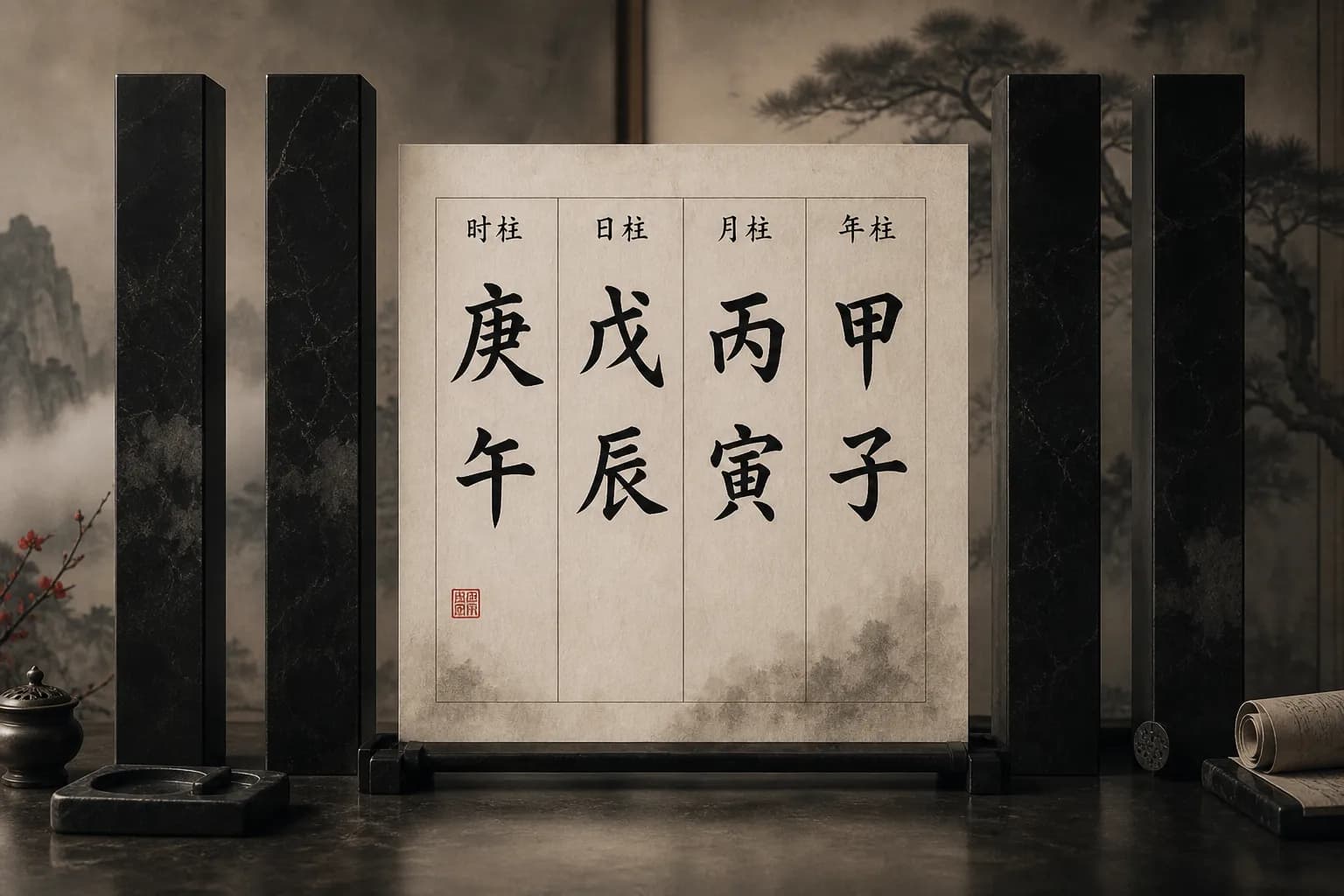
You just opened your Four Pillars chart and the day stem reads 甲 — a Jia day master, Yang Wood in the ten-stem system. That label can feel both specific and vague: you know the name, but not yet what tradition reads from it. Within this system, Jia is one of ten Day Masters, each a self-reference point rather than a fixed personality type. You can confirm yours anytime with a free Four Pillars chart; this page explains what Jia Yang Wood tends to describe when the rest of the chart supports it.
What is the Jia (Yang Wood 甲) day master?
The Day Master is the Heavenly Stem on your day pillar — the stem from which Ten Gods and strength readings are anchored. Jia (甲) is Yang Wood: the tall tree image in classical texts, associated with upward growth, straight lines, and carrying weight for others. Tradition reads it as a pattern of extension and responsibility, not a moral score. For where stems sit in all four pillars, see Heavenly Stems; for how the Day Master generates Ten Gods roles, see Ten Gods.
甲木参天,脱胎要火。
— 滴天髓
How to find your Day Master
Within this system, finding your Day Master takes three steps: (1) generate your Four Pillars chart from birth date and time; (2) locate the day pillar — the third column, marked Day; (3) read its Heavenly Stem (top character). That stem is your Day Master. Unlike the year branch (shared by everyone born that year), the day stem is one of the chart's most individual anchors — though month and hour can still coincide with others. For Ten Gods and full structure, use the Four Pillars tool.
The tall tree: the core pattern
Within this system, the tall-tree image maps to a core pattern: growth that prefers clear direction, visible structure, and room to rise. Tradition may suggest that Jia Day Masters tend toward initiating projects, holding standards, and offering shelter — like canopy shade rather than decorative foliage. This is pattern language: some charts with Jia read as builders and protectors; others, when the chart is cold or constrained, may show the same stem as stiffness or isolation. The image is a handle, not a prophecy.
Strengths and friction points
When Yang Wood qi is supported, tradition often reads directness, reliability, and willingness to carry responsibility. The same straight trunk that shelters others can, under pressure, become rigidity: difficulty bending, hearing feedback late, or over-committing because saying no feels like failing the role. Within this system, the friction pair is common — upright leadership on one side, stubborn inflexibility on the other. Neither is "good" or "bad"; both are tendencies to notice against season, strength, and the other seven characters.
Jia (Yang Wood 甲) in career and work
In work settings, Jia patterns may suggest environments where clear goals, visible progress, and ethical structure allow the stem to extend — think long-horizon building rather than constant pivoting. Tradition may indicate friction in roles that demand endless compromise without a north star, or cultures where authority is ambiguous and every decision is renegotiated. This describes fit as pattern, not prescription: a Jia chart with strong Metal pressure might thrive in disciplined systems; the same stem with weak roots might feel exhausted by leadership titles. Use career sections as orientation, not job orders.
Jia (Yang Wood 甲) in relationships
In relationship symbolism, Jia is traditionally paired with Ji Yin Earth through the 甲己合 combine — often described as tree and garden soil, structure meeting nurture. That is symbolic pairing language, not a compatibility verdict; serious questions belong in full-chart relationship reading. Compared with Yi Yin Wood (the vine), Jia tends to read as more overt and architectural in how care is shown. Treat combine references as thematic hooks, not fate links.
When the rest of the chart changes the picture
Two people both Jia Day Masters can read oppositely: one born in spring with rooted Wood may present as confident and expansive; another born in autumn with heavy Metal control may feel the same stem as constrained, tired, or over-corrected. Strong versus weak Day Master, birth season, and the other seven characters rewrite every section above — which is why Five Elements balance and the Day Master × Wu Xing method guide matter more than any single-stem essay. The Day Master is one of eight characters: a reference coordinate, not the whole map.
The day master is a reference point, not a verdict — the reading is yours to use.
FAQ
Is Jia a good day master?
Within this system there is no ranking of better or worse Day Masters — only structure and context. Jia describes a Yang Wood pattern; whether that pattern feels supportive depends on season, strength, Ten Gods, and luck cycles, not the stem label alone.
How do I know if I'm a Jia day master?
Check the Heavenly Stem on your day pillar after you generate your Four Pillars chart. If the day stem is 甲, you are a Jia Day Master.
How is Jia (Yang Wood) different from Yi (Yin Wood)?
Both are Wood Day Masters, but tradition contrasts the tall straight tree (Jia) with the flexible vine (Yi). See the Yi Wood guide for the Yin Wood pattern; always modulated by the full chart.
What element is Jia?
Jia is Yang Wood. See the Four Pillars chart; for stem placement in all pillars, see Heavenly Stems.